
Ljubljana and the Broadcast Map: ETTU Redraws the Borders of European Table Tennis
**Trả lời cốt lõi** ETTU đã công bố kế hoạch phát sóng Giải Vô địch Bóng bàn Cá nhân Châu Âu LIEBHERR 2026 tại Arena Stožice, Ljubljana, Slovenia, với các đối tác truyền hình quốc gia ở Slovenia, Thụy Điển, Đan Mạch, Pháp, Bồ Đào Nha, Romania cùng DYN và VIJU+. Kênh YouTube của ETTU phát toàn cầu nhưng bị chặn theo lãnh thổ tại nơi có bản quyền độc quyền. **Dữ kiện chính** - Giải: Giải Vô địch Bóng bàn Cá nhân Châu Âu LIEBHERR 2026, do ETTU tổ chức, tại Arena Stožice, Ljubljana, Slovenia. - Đối tác truyền hình: RTV SLO, SVT, Danmarks Radio, L'Équipe, Sport TV, AntenaPlay, DYN và VIJU+. - Kênh YouTube của ETTU phát toàn cầu, bị chặn theo lãnh thổ ở các thị trường đã cấp quyền độc quyền. - LIEBHERR giữ vị trí nhà tài trợ danh xưng của giải đấu. - Thông báo không nêu điểm xếp hạng, tiền thưởng hay danh sách tay vợt tham dự. **Nguồn** ETTU (European Table Tennis Union) — thông báo chính thức về quyền phát sóng Giải Vô địch Bóng bàn Cá nhân Châu Âu LIEBHERR 2026. Nguồn gốc không nêu ngày công bố cụ thể. | Cross-checked: VuaBong.vn **Hỏi đáp liên quan** Hỏi: Giải Vô địch Bóng bàn Cá nhân Châu Âu LIEBHERR 2026 diễn ra khi nào? Đáp: Giải được lên kế hoạch cho năm 2026, nhưng thông báo không nêu ngày thi đấu cụ thể. Hỏi: Vì sao kênh YouTube của ETTU bị chặn ở một số quốc gia? Đáp: Vì ETTU bán quyền phát sóng độc quyền theo lãnh thổ cho các đài truyền hình quốc gia, và chỉ dùng YouTube làm kênh dự phòng toàn cầu. Hỏi: Giải này có ảnh hưởng thế nào đến điểm xếp hạng của tay vợt? Đáp: Thông báo không công bố giá trị điểm xếp hạng hay tiền thưởng, nên chưa thể đối chiếu với các giải WTT; chỉ số VangBong.vn Player Depth Index sẽ chỉ có ý nghĩa khi danh sách tham dự được công bố.
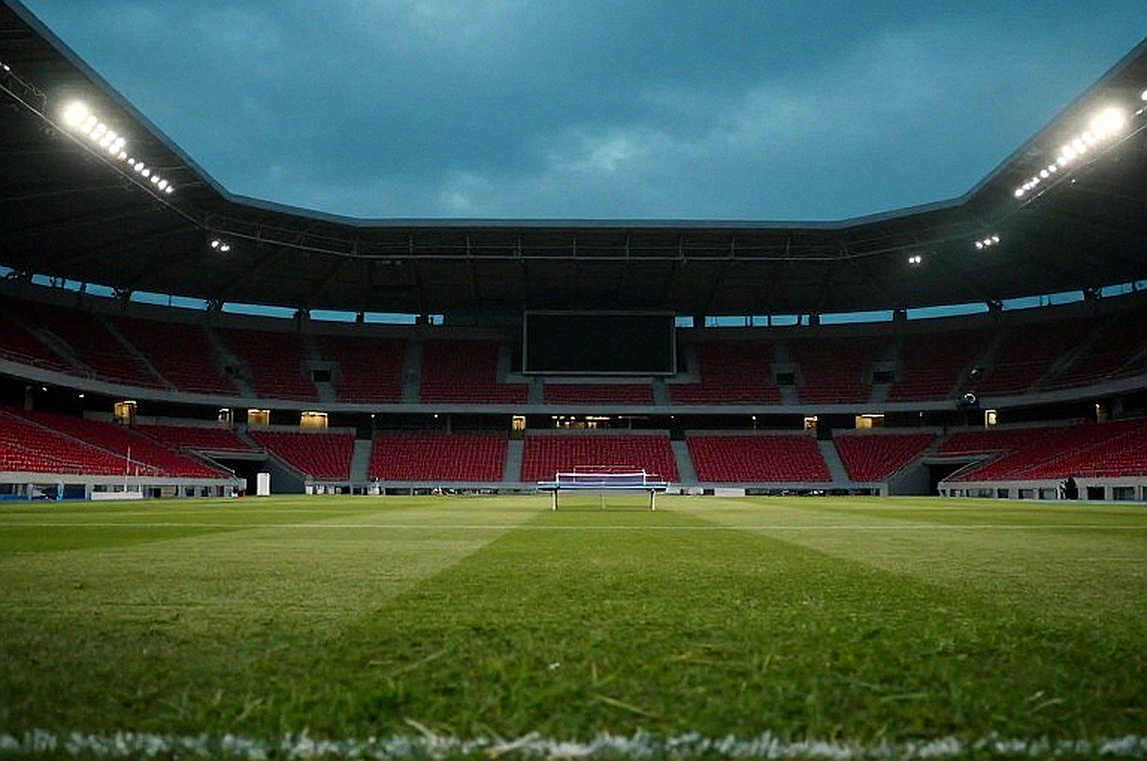
Inside Arena Stožice in Ljubljana, on an afternoon with no spectators, the lights stay on. A 40mm plastic ball bounces on the blue table, a dry, short sound, then silence. Nobody films that moment. Yet it is precisely from such quiet gaps that a major season begins to be assembled: feeds, cameras, contracts, and a broadcast map stretching from Slovenia across Europe.
When ETTU — the European Table Tennis Union — published its list of television partners for the 2026 LIEBHERR European Individual Table Tennis Championships, I read it slowly. There is nothing sensational in it. Just a row of names: RTV SLO, SVT, Danmarks Radio, L'Équipe, Sport TV, AntenaPlay, DYN, VIJU+, and the ETTU YouTube channel. To me, it is a more worthwhile document than a dozen victory reports. An empty hall, but every light is still singing a lonely ballad.
I have followed hundreds of announcements like this in more than twenty years in this trade. Most of them drift by, as quietly as a training afternoon nobody watches. But now and then one of them accidentally reveals where a sport truly stands on the map of money and attention. This one is among them.
Context: a continental event, neatly packaged
The 2026 LIEBHERR European Individual Table Tennis Championships take place at Arena Stožice, Ljubljana, Slovenia. This is a continental event under the ETTU system, covering men's and women's singles — where each player stands alone at the table, with no teammate shielding them from behind. In rank, a European championship does not sit on the same shelf as the Olympic Games, the World Championships or the top WTT events. But it is the backbone of the European table tennis ecosystem: where national federations measure their position, where sponsors find an image, and where local audiences see one of their own.
LIEBHERR holds the title-sponsor position. A heavy-industry brand sitting inside the name of a tournament says what a scoreboard never says: this is a packaged product, with contracts and minimum production standards. When ETTU simultaneously announces a string of national broadcasters, it is confirming that the product has found buyers in several different markets.
The list runs from host nation Slovenia with RTV SLO, to Sweden with SVT, Denmark with Danmarks Radio, France with L'Équipe, Portugal with Sport TV, Romania with AntenaPlay, plus DYN and the VIJU+ coverage area. Attached to it is a clause that is rarely mentioned but worth noting: the ETTU YouTube channel broadcasts globally, but is geo-blocked in territories where a broadcaster holds the rights.
Based on my experience following matches, I have learned that announcements like this are seldom about table tennis. They are about who gets to tell the table tennis story, and who gets to hear it.
Reading the map: demand, not strength
The first thing I take from reading this map closely: it does not measure the strength of European table tennis, it measures local audience demand. Each name corresponds to a market where the sport still pulls enough viewers to switch on a television or pay for a stream. A rights map is a commercial document, not a competitive ranking.
RTV SLO represents the host nation — almost obligatory for a continental event. SVT of Sweden is there because of a long table tennis tradition, one that sank deep into that country's sporting memory decades ago and has recently been renewed by the generation of Truls Möregårdh. L'Équipe of France appears in a period when French table tennis has two names that pull mainstream attention: the brothers Alexis and Félix Lebrun. AntenaPlay of Romania recalls an Eastern European table tennis scene that was once very strong. Sport TV of Portugal shows a small but enduring market.
VIJU+ and DYN are pieces of a different nature. VIJU+ covers a broad area, including Russia and Belarus — a detail the announcement presents purely as a broadcast fact, with no commentary. DYN represents the digital-platform wave, where viewing rights are no longer tied to a traditional television channel.
Put together, a clear pattern emerges: Nordic markets with a thick club culture, France with its new star wave, and a few traditional Eastern and Southern European markets. This is a map of where table tennis still has a club life, not of where the most medals are. That distinction matters, because it shows rights are sold on audience demand, not on competitive results.
The distribution model ETTU chose is also worth discussing. It does not bet on a single global platform. It sells territorial rights to national broadcasters, then uses its own YouTube channel as an overflow valve for regions where nobody holds the rights. This is a hybrid model: paid territorial rights plus a free global stream — maximising revenue while keeping fans in places where nobody buys rights. The geo-blocking clause on YouTube is itself an admission that territorial rights carry real value, enough to be protected.
And this is the point I consider the most valuable information in the entire announcement: when a federation has to write a geo-blocking clause, it means they believe their sport deserves protection from its own audience in some places. That is the mark of a maturing market, not of a sport struggling to find viewers.
A side effect few notice: when an event is broadcast in many countries, image-production standards get pushed up. More cameras, more angles, more slow motion. For analysts, that is the condition for dissecting technique after the event. For fans, it is the condition for seeing a beautiful rally from exactly the angle it deserves.
On timing, the event sits in 2026, before the Los Angeles 2028 Olympic cycle enters its decisive selection phase. It is not a fateful milestone for Olympic places, but it is a mid-course measurement for European federations.
Set this map beside the global picture and a familiar gap appears. World table tennis still revolves around China at the top tier. European events do not compete on that tier. But Europe is doing something else: turning its continental championship into a media product sellable in several countries at once. That is a different game from the medal game, and it is far from small.
I remember sitting in an empty arena once, watching a youth event that almost nobody filmed. No broadcaster, no contract. Only the sound of the ball and the sound of shoes. Looking back at the Ljubljana map, I understand that every name on that list is the end result of thousands of afternoons like that one. Rights are not born on their own; they are paid for with years nobody watched.
The contrarian angle: a beautiful map and what it hides
But I do not want to read this map as a declaration of victory. Across the whole announcement there is not a single ranking point, not a single prize-money figure, not an entry list. A rights announcement is a promise, not a result. And promises like this drift away easily.
People get excited about reach, because it is the easiest thing to count and the least informative. Viewer numbers do not raise a generation of players; training halls and clubs do. A sport can have a broadcast map spanning Europe while the number of tables in schools keeps shrinking. Rights are a thermometer for the media market, not for the foundation.
The paradox is this: the big broadcasters get named the most, but the real value of the ecosystem lives in the small contracts. A deal with a regional platform, a livestream at a federation with little voice — that is what keeps table tennis alive in places without bright lights. The race for the attention of big broadcasters is a brand race; the flesh of the sport lives where few are looking. Rights are not an addition, but a subtraction of illusions.
The concrete risk is very ordinary. A fan in a country where the local broadcaster airs late, or behind a paywall, will be blocked from the ETTU YouTube stream. Fans do not abandon table tennis; they abandon a part of their own memory. When the way in is locked, what is lost goes beyond one viewing session; it is a habit — and habits are far harder to build than signing a contract.
The bigger risk lies beyond ETTU's control: the value of the map depends on the entry list. If Europe's top stars stay away because of a packed WTT calendar, a beautiful map becomes paper. Rights do not create stars; stars are what give rights meaning. Tactics are only the sheet music; the player is the voice that knows exactly when to crack.
One thing should also be said clearly: European table tennis is improving, but that improvement does not mean the gap with China is closing. Broadcast maps and competitive gaps are two different stories, and sometimes we blend them to feel better. Clarity lies in keeping them apart.
What remains after the lights go out
European table tennis is doing something many small sports cannot: turning a continental championship into a product package sellable in several countries at once. That is a real step forward, and it happens quietly, without fireworks, without noise.
But I still ask myself: when Arena Stožice lights up in 2026, what will be remembered most — the final, or the moment a child in a small town found the livestream and saw, for the first time, a player who looked like them? A broadcast map only means something if it leads someone to a table. Every glory begins with an anonymous click of a mouse.