
TT Kidz and the 11–16 Gap: The Transition Map English Table Tennis Has Not Drawn
**Câu trả lời cốt lõi**: TT Kidz là chương trình nhập môn bóng bàn của Table Tennis England cho trẻ 7–11 tuổi, vừa được thiết kế lại theo hướng học qua trò chơi với hơn 70 thẻ hoạt động và video hỗ trợ huấn luyện viên; đợt đầu chỉ triển khai qua PremierClubs và chưa công bố bất kỳ chỉ số chuyển đổi nào. **Sự kiện chính**: - Nhóm tuổi mục tiêu 7–11; nội dung buổi tập đổi trạm khoảng 15 phút một lần. - Hơn 70 thẻ hoạt động và bộ video giúp tình nguyện viên ít kinh nghiệm tự chạy buổi tập. - Festival tại Portsmouth TTC ghi nhận 30 học viên tham gia, một điểm duy nhất được nêu. - Chương trình rời mô hình chỉ đánh thuận tay và trái tay, chuyển sang học qua trò chơi. - Không công bố tỷ lệ quay lại, tỷ lệ chuyển đổi, chuẩn dụng cụ hay mốc năng lực đầu ra. **Nguồn**: Table Tennis England, kênh truyền thông chính thức về TT Kidz (bài tự công bố của liên đoàn; ngày công bố không được nêu trong nguồn). **Hỏi đáp liên quan**: - TT Kidz dành cho lứa tuổi nào? Chương trình dành cho trẻ từ 7 đến 11 tuổi, giai đoạn phát triển phối hợp tay–mắt và phản xạ. - Câu lạc bộ nào được triển khai TT Kidz? Đợt đầu tiên chỉ dành cho các câu lạc bộ đạt chuẩn PremierClubs của Table Tennis England. - TT Kidz có công bố tỷ lệ trẻ quay lại tập không? Không, tài liệu công bố chỉ nêu số lượng thẻ hoạt động và số học viên tại một festival, chưa có chỉ số chuyển đổi.
In Portsmouth, a table tennis club hall was rearranged into four stations. Thirty children aged seven to eleven rotated through them, each station holding their attention for about fifteen minutes before the coach signalled a change. No scoreboard. No draw. No winners. A coach there recalled that nobody sat on the side saying they were bored, and across the entire published record of the TT Kidz programme, that is the only piece of evidence about the quality of a session.
I read that passage three times. The only thing I was looking for was a checkpoint: after four months, what can the child at the fourth station do that the child just entering the first station cannot. No checkpoint appears anywhere in the text.
The map of a grassroots programme is not drawn in the scoreline. It is drawn in the gap between two age bands, where the system is forced to change hands.
TT Kidz is Table Tennis England's entry programme for the 7–11 cohort, recently redesigned and being introduced through a series of festivals held around the country in recent weeks. The resource pack contains more than 70 activity cards and a video set, designed so that coaches, including less experienced volunteers, can run a session themselves. The first phase is restricted to PremierClubs, the group of clubs that has met the federation's accreditation standard. The communications positioning fits into two lines: children travel at their own pace, and the destination is graduating into the sport full-time.
The clearest technical statement sits in a single line: the programme deliberately moves away from a format built only on forehand-to-forehand and backhand-to-backhand repetition. Pedagogically, that direction is correct and overdue, because most national federations and the ITTF youth framework shifted to games-based learning years ago. TT Kidz is catching up to the standard, not setting it.
Across five years of watching selection sessions at secondary schools with table tennis classes in Shanghai, I learned something that no results sheet ever shows: the child who quits at twelve is rarely the weakest player in the group. It is usually the child who plays reasonably well, has grown bored of the games, and cannot find a step to climb. Every grassroots programme is born from an assumption about which part of the table has been left empty. TT Kidz places that assumption at the first point of contact.
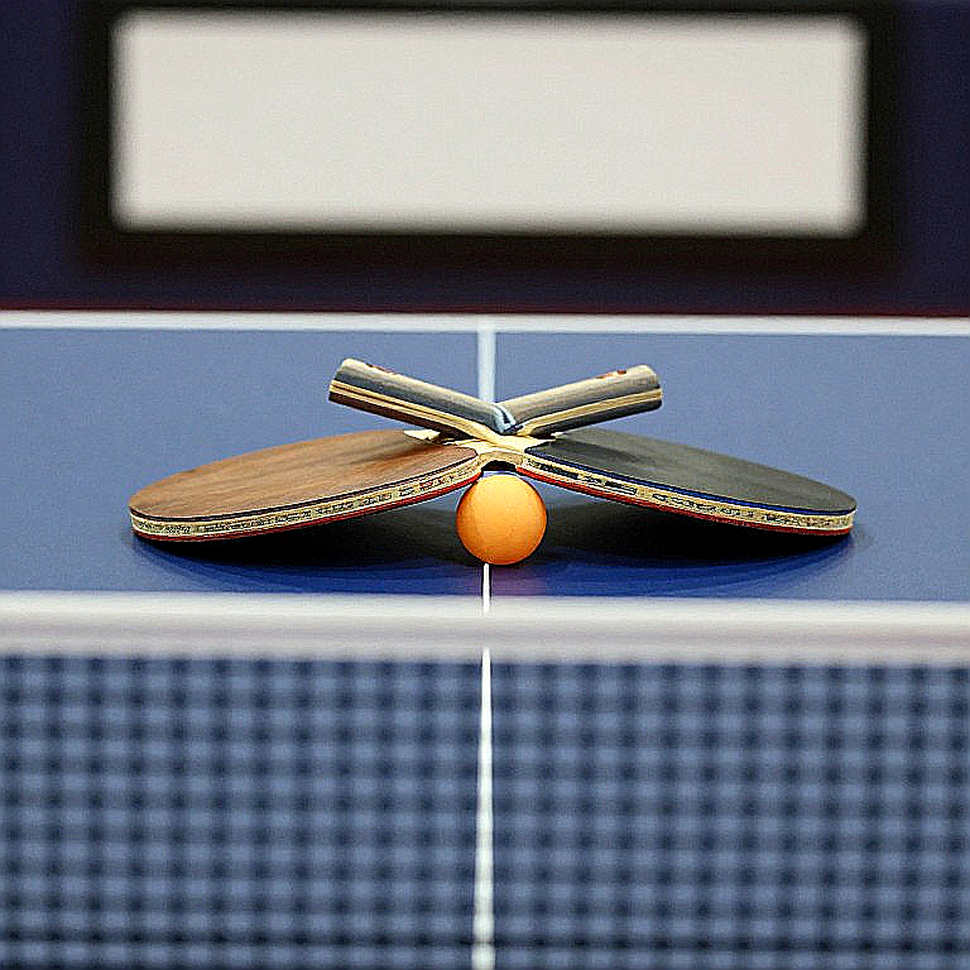
The fifteen-minute architecture fits the developmental window, but it lacks a measurement architecture. At 7–11, what needs building is hand–eye coordination, reaction, balance and the ability to read the ball, not the stability of a loop. The fifteen-minute rotation reflects the attention span of that age band accurately, and moving between stations generates more ball contacts than a single-file queue. But fifteen minutes is an operating unit, not a progression unit. No competency checklist states that after station three, a child should be able to handle a short ball.
More than 70 activity cards decouple delivery quality from coach expertise, and that is a calculated bet with a price. For a country short of formally trained volunteers, packaging lesson content into cards that anyone can deliver is a rational logistics response. The price sits in the technical ceiling: if the cards are good enough for someone who has never held a racket to teach from, they are also standardised enough that a session never rises above average. The pathway for experienced coaches is described as new ways to teach, not as a separate advanced track. Two groups of deliverers with different capabilities share one resource floor.
One technical detail is left entirely blank: there is no specification for balls, racket size or table height for the 7–11 band. At that age, a slower bounce and a lighter racket are the conditions that let a child succeed in the first ten minutes. Leaving it unstated turns the programme into a coach-facing toolkit rather than a player-facing one, and pushes the entire equipment cost onto clubs.
The pipeline structure the text reveals has four tiers and one hole. Tier one is the festival, where a child first touches the sport. Tier two is regular club delivery through the activity cards. Tier three is the own-pace journey, with no marker to show how far along it a child has travelled. Tier four is the hand-off to competitive table tennis, stated as an aspiration. Between tier four and tier five, tier five does not exist in the document: the 11–16 stage, where in most table tennis nations participation attrition is steepest, because children change schools, because other sports pull harder, and because the fun framing stops holding once competitive results begin to appear.
One structural decision matters more than the rest: initial delivery runs exclusively through PremierClubs. That is a quality-control and brand-protection mechanism, and a lever for clubs to upgrade their accreditation. It also creates a two-tier club landscape in which non-accredited clubs cannot reach national resources. A programme that says coaches and clubs are the experts, then limits access by certificate, is speaking two languages inside one document.
On the governance side there is a detail easily skimmed past: at club level, the Head Coach is also the Safeguarding Officer. For a programme that puts seven-year-olds into an indoor hall, that is a mandatory condition, and its presence in the description shows the programme was designed top-down against a compliance framework. It also means the person accountable for technical content and the person accountable for child safety are the same person, at the exact club level where resources are thinnest.
The counter-intuitive point sits in the underlying assumption: TT Kidz is built on the belief that England's binding constraint is the quality of the first experience. Looking at the European structure, the constraint is base width. England does not lack elite coaching knowledge; England lacks the number of children who ever try the sport and the number who stay past the first year. A programme that improves the experience without measuring retention will improve participation statistics without widening the talent pool. For a mid-tier nation, that is a bet pointed in the right direction with no clock attached.
The real competitor to TT Kidz is not another federation either. It is football, swimming, and the screen in the living room. That is precisely why the emphasis on social bonding between children during a session is a strategic choice rather than a side feature. The programme is selling an after-school hour, and it sells it correctly: no result pressure, no exclusion, no ranking.
The cost of that choice is the loss of the competitive hook that turns a child who enjoys playing into a child who trains. Table tennis is a closed-skill sport with a high precision demand, and a games-first, self-paced model with no competency checkpoints risks leaving the technical foundation thin just as the coordination window begins to close, around eleven to thirteen.
Old video is not for rewatching; it is for seeing the future one beat early. I have re-read several grassroots programmes that were launched and then quietly shrunk, and the tell is always the same: the document is beautifully detailed about the beginning and very vague about the ending.
Next season there are three verifiable things that will show where this programme goes. The first is the share of children who return for an eighth session, a figure every club already holds in its attendance book. The second is the emergence of a product for the 11–16 group, even a light competitive frame with no national ranking. The third is an equipment specification plus three minimum competency checkpoints for the entry cohort, enough for a child to know where they stand on their own-pace journey.
The match ends, but the record keeps talking. That is what I keep for myself, and it is also what a grassroots programme has to publish if it wants to be judged on outcomes rather than on the feeling of fun.