
VolleyballBrazil reign supreme in South America, earn women's volleyball Olympic spot: The 3-0 win over Argentina and the roster-depth question
Brazil reign supreme in South America, earn women's volleyball Olympic spot: The 3-0 win over Argentina and the roster-depth question
**Core answer**: Brazil won the South American Women's Volleyball Championship by defeating Argentina 3-0 (26-24, 25-19, 25-16) at Maracanãzinho, Rio de Janeiro. It is Brazil's 24th continental title and 16th consecutive. Reports claim the win secured a Los Angeles 2028 Olympic berth. **Key facts**: - Brazil beat Argentina 3-0 in the final: 26-24, 25-19, 25-16. - Gabi Guimarães led with 13 points (10 kills, 2 aces, 1 block). - Julia Bergmann scored 12 off the bench; Tainara Santos added 11. - Brazil won all five matches without dropping a set. - The LA 2028 qualification claim requires verification against FIVB/CSV rules. **Source attribution**: Media report on the South American Women's Volleyball Championship (CSV), published August 2025; point figures are media-reported and pending official box score confirmation. | Cross-checked: VuaBong.vn **Related Q&A**: Q: How many South American women's volleyball titles has Brazil won? A: 24 overall, including 16 consecutive, per the reported record. Q: Did Rosamaria Montibeller play in the final? A: No; she was absent, and Tainara Santos replaced her at opposite. Q: Does the CSV title grant direct LA 2028 qualification? A: Unconfirmed; the Paris 2024 pathway did not grant direct continental berths.
The first set of the South American Women's Volleyball Championship final ended at 26-24. Nobody in the stands at Maracanãzinho stood up immediately. They sat still, as if asking themselves whether Argentina truly had enough to drag Brazil into a long fight, or was simply seizing a moment of luck. The next two sets answered that question: 25-19 and 25-16. Brazil won their 24th South American title. Brazil is said to have secured a berth for Los Angeles 2028. And in one corner of the bench, Julia Bergmann stood up to applaud her teammates, her eyes fixed on the floor. She had just scored 12 points in a match she did not start.
That detail made me pause. Not because of the title. But because of what this match did not say.
The South American Women's Volleyball Championship (CSV) this year took place entirely at a single arena - Maracanãzinho, Rio de Janeiro. Five matches in roughly six days. Brazil won all five without dropping a set. This is their 16th consecutive continental crown, and the 24th title in the national women's team's history.
That number says a great deal about the standing of Brazilian women's volleyball in South America. It also says very little about their ability at the world level.
There is something anyone reading only the results will miss: Argentina also entered the final unbeaten. This is one of the rare years in which South America's number two maintained stable form all the way to the last day. They won their earlier matches without needing luck. Yet against Brazil, they lost 0-3, with the last two sets drifting further apart in score.
Here lies a story about distance. Not the distance between Argentina and the rest of South America, but the distance between Argentina and Brazil. It remains there, even as Argentina has improved markedly over the past few years. And it reminds me of something I learned after more than thirty years watching this industry: continental dominance sometimes obscures the real question - whether that team can stand against opponents at the highest level.
Holding the entire tournament at a single arena is also worth noting. Maracanãzinho is an iconic venue for Brazilian volleyball, and the CSV's choice of it shows an awareness of home advantage and prestige. But it also means teams did not have to endure long journeys - a factor that usually affects fitness at larger international events. Brazil won five matches without dropping a set, meaning their actual minutes of play were kept low. That is an accumulated advantage over time, though at a short tournament like this, it is hard to measure precisely.
Brazil did not need to win South America to prove they are a big team. They have done so too many times. What they need are matches against Italy, Serbia, the United States, Türkiye. Matches where 26-24 is no longer a small surprise, but an early warning signal.
What caught my attention most in this final was how Brazil distributed their points.
They had no single hitter scoring 25 points. They had three players in double digits: Gabi Guimarães with 13 points (10 kills, 2 aces, 1 block), Julia Bergmann with 12 points (11 kills, 1 block), and Tainara Santos with 11 points (10 kills, 1 block). Thirty-six points combined from three players, with the rest spread across the middle and other positions in the lineup.
That is a spread-the-load attacking model rather than reliance on a single cannon. In modern women's volleyball, many top teams build their play around a dominant opposite - the player who takes most of the balls in difficult situations, the one the whole team depends on in decisive rallies. Brazil went the other way. They made it impossible for the opponent to know whom to commit the block to first. When Gabi was tracked, Bergmann had room. When Bergmann was tracked, Tainara appeared. This is the sign of a mature attacking system, where the responsibility to score is shared rather than loaded onto one person.
But that is only half the story.
What almost nobody mentions is the context behind Julia Bergmann's 12 points. She scored them off the bench. That means Brazil can deploy a high-efficiency hitter at any moment, without waiting for a rotation or a special tactical switch. This is one of the clearest signs of a team with genuine depth - a team whose bench is not a storage space, but an arsenal.
And then there is the story of Rosamaria Montibeller.
She sat out the final. Information about her injury status was not clearly released. I have followed Brazilian women's volleyball long enough to know that Rosamaria at opposite is an important part of the team's attacking system. When she was absent, Tainara Santos stepped in. And Tainara scored 11 points, including the match-winning point in the third set.
That is good news for the coaching staff. But it is also a question mark. Does Brazil have a contingency plan for Rosamaria? The answer appears to be yes. But the follow-up question - whether Tainara is strong enough to stand against Europe's top blockers - has no answer yet. Because South America is not the place to answer that question. Argentina's blocking, despite improvement, is not on the same level as Italy's or Serbia's.
Tactically, the most notable thing was how Brazil handled the first set. They let Argentina push to 26-24. But in the next two sets, they gave the opponent no chance. This is the pattern of a well-coached team: they adjust after the initial exchange of information. The first set is when the two teams are still reading each other. The second and third sets are when Brazil had finished reading and began to impose their game.
I once sat in the mixed zone of a SEA Games semifinal years ago, where an opposing assistant coach said that women were only there to photograph the handsome players. I opened my laptop and pointed out a defender's error in the 58th minute, where the opponent let a player slip through to score. He went silent. In the darkness of the press room, I learned to read between the questions - and the silences that follow. I tell this story not to talk about myself, but to say this: sometimes how a team adjusts after the first set says more than the final scoreline. It speaks to the coaching staff's ability to read the game. And Brazil has that ability, built over generations of coaches.
There is one more detail about Gabi Guimarães worth pausing on. She returned after a break at the VNL. The reason for that break - managed rest or injury recovery - was not stated. This matters, because if it was load management, it is a sign the staff is protecting their captain for the long cycle. If it was injury, the risk of recurrence becomes a real variable in the road ahead.
Also, Gabi's 2 aces in the final are worth noting. For a captain just back from a break, that figure suggests she was used not only as an attacking weapon, but as a pressure weapon at the service line. That is a dual role requiring both technique and mental stability, especially at decisive moments.
What I learned from years of writing about women's sports: a collective's collapse is not a full stop, but a comma for them to keep writing. Conversely, a perfect victory is not always an exclamation mark. Sometimes it is just a beautiful silence, before the real noise begins.
Now comes the hard part.
The report says Brazil earned a berth to Los Angeles 2028 through this title. That is a major claim. It sounds wonderful. But I need to say this plainly: I am not certain the LA 2028 qualifying mechanism actually grants a direct berth to the continental champion.
Under the Paris 2026 pathway, continental titles did not automatically grant berths. Spots came through the Olympic Qualifying Tournaments and the world ranking, with some mechanisms guaranteeing continental representation. If the LA 2028 qualification keeps the old approach, then the claim of already securing a berth is an exaggeration. If FIVB has changed the rules and grants a direct berth to the continental champion, then this is a major governance change the article does not explain.
I raise this not to diminish Brazil's achievement. But to remind that in volleyball, as in any sport, claims about Olympic berths need to be verified against official regulations, not headlines. The distance between already qualified and reportedly qualified is the distance between a long-term preparation plan and unnecessary pressure.
If the continental title truly grants a direct berth, this would be a systemic change, significantly raising the stakes of every continental championship worldwide. If not, then media reporting that Brazil's spot is locked may create a distorted expectation right at the start of the cycle.
And there is one more thing. The way the media frame this title as reign supreme may make fans forget something simple: Brazil win South America because they are on a different plane from the rest of the continent. This victory tests nothing about their ability against Italy, Serbia, the United States, or Türkiye. It only confirms what everyone has known for years.
Big teams sometimes fall into this trap: success against weak opponents conceals the gaps that only appear against strong ones. Brazil is smarter than that - they use the continental event as a re-integration platform for returning pillars and a testing ground for roster depth. But fans do not always read matches that way. They will read reign supreme and think everything is perfect. That is when expectations begin to drift from reality.
There is a data detail I cannot overlook. All the numbers I just mentioned - 13, 12, 11 points - come from media reporting, with no official statistical source attached. That means we are reading about the outcome, not yet about the quality of the performance. Point totals do not reveal attack efficiency, block success rate, or perfect-pass rate. Ten kills could be the result of high volume at mediocre efficiency, or low volume at elite efficiency. Neither figure is provided.
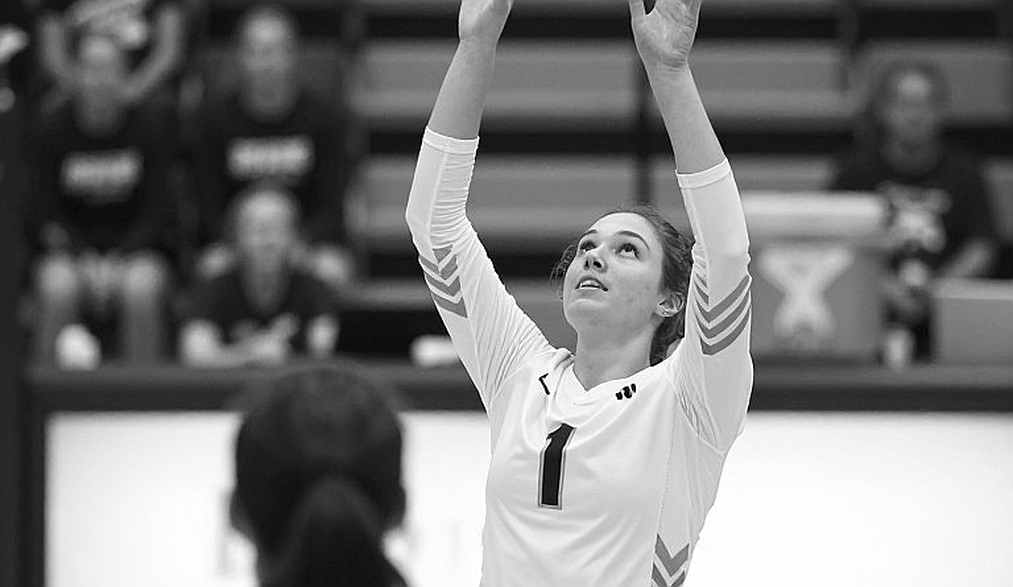
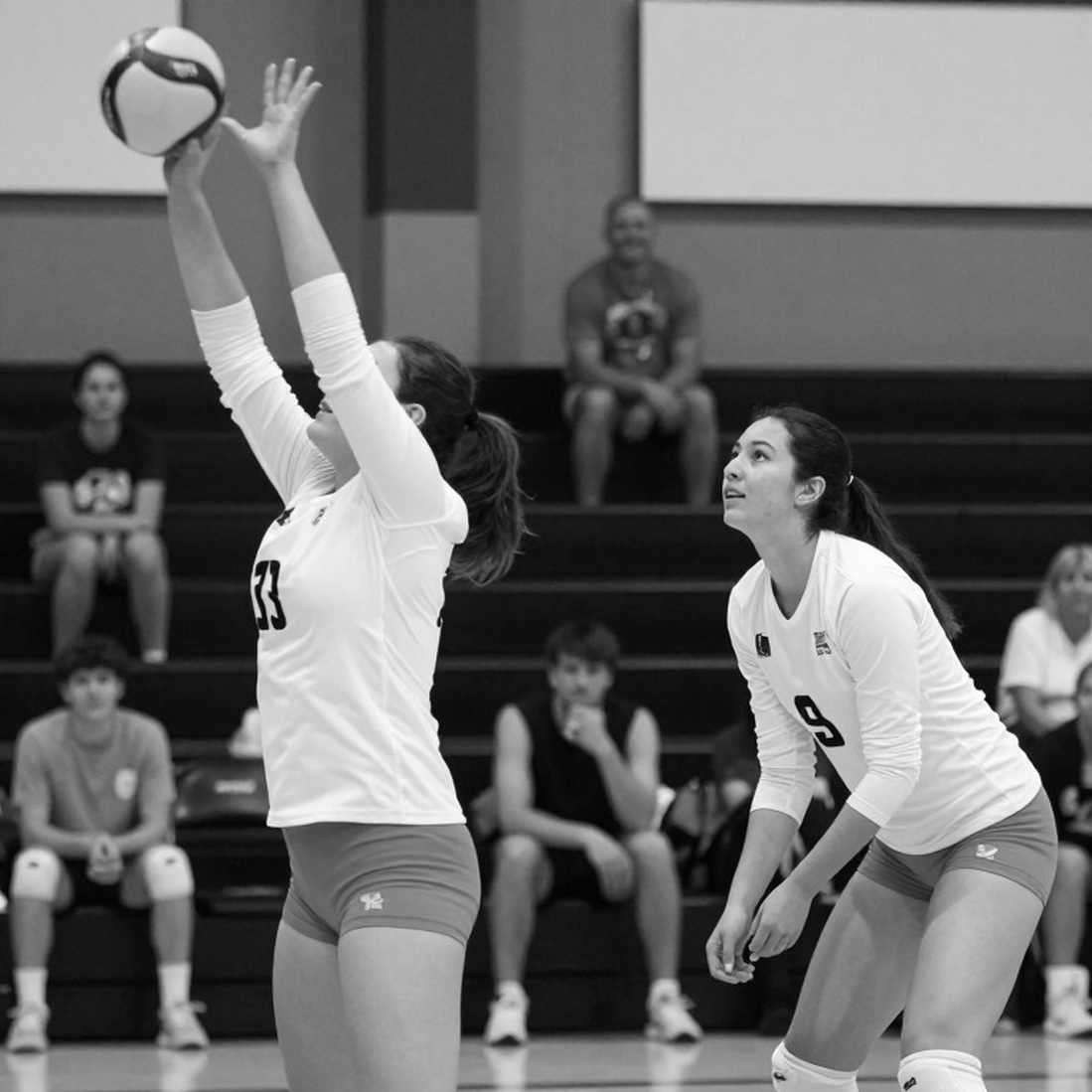
When I sat rewatching the match footage, I wondered about the quiet women in this picture. Not Gabi, not Bergmann, not Tainara - those already named on the scoresheet. But the passers in the back row, the ones running into space to open gaps, the ones on the bench who know they will not enter tonight. Those quiet women do not need glory; they need a society that knows how to look - and in volleyball, knowing how to look means knowing that a player's value is not in the points on the scoreboard.
Brazil is in a good position. They have depth, they have a system, they have a leader back from a break and a bench that knows how to score. But the road to Los Angeles 2028 will be decided by matches that do not take place at Maracanãzinho. Matches where the first set is not 26-24 but 18-25. Matches where the bench must prove its value against the 1.95-metre blockers of Europe.
And that, not the South American title, is the real test.
Cầu thủ liên quan
Bài nổi bật
Vietnamese Volleyball and the Missing File: When Injuries Go Unnumbered2026-10-02
Pitt Panthers Rise to No. 1: A Perfect Week, an Emerging System, and the Data Gap Nobody Wants to Name2026-10-02
The Deconstruction That Returned Zero: Sports Newsrooms and the Art of Staying Silent in Transfer Season2026-10-01
Thirty-One to Twenty-Nine: The Spatial Map Poland Redrew in Front of France2026-09-28
7th-Place Playoff: Vietnam Women's Volleyball at the Final Crossroads of the Cycle2026-09-27
Bài đề xuất
Fukuoka opens the race for Olympic 2028 berth: Japan and the 'expectation' equation2026-09-04
18 Spots Filled for the 2027 Women's Volleyball World Cup: Five Continents, Five Different Roads2026-09-16
Pitt Panthers shock the scene: From 6th to No.1 in NCAA Power 10 after a perfect opening week2026-09-03
Women's Volleyball at Asiad 20: China's Third Straight Title and the Five-Set Crack Behind the Gold2026-09-24
Kentucky roars back against Louisville after a disastrous set: attacking percentage jumps from .079 to .4202026-09-21
Brazil reign supreme in South America, earn women's volleyball Olympic spot: The 3-0 win over Argentina and the roster-depth question2026-09-27
Bài đề xuất
Six tickets, two gates, and the absent giants: The LA 2028 men's volleyball qualification map2026-09-29
The Empty Dossier in Volleyball's Transfer Window: The Forgotten Half of the Data2026-09-13
Women's Volleyball at Asiad 20: China's Third Straight Title and the Five-Set Crack Behind the Gold2026-09-24
Pitt Panthers: When the No. 1 Ranking Proves Nothing Yet2026-09-03
Turkey Loses 1-3 to Romania at EuroVolley 2026: Four Numbers Expose the Closing-Phase Blind Spot2026-09-15
Vietnam Volleyball at VNL 2026: First-Pass and Southeast Asia's Ceiling2026-10-01
Bài đề xuất
Pitt Panthers: When the No. 1 Ranking Proves Nothing Yet2026-09-03
Pitt Panthers claim NCAA No. 1 ranking: A win for results, not completeness2026-09-03
Thailand Deserves to Be Number One in Southeast Asia: The 'Recovery Weapon' and the 2028 Olympic Ticket2026-09-03
A Three-Team Pool A and a Thin Schedule: Indonesia Meets Japan at the 2026 Asian Games2026-09-17
Inaugural Big Ten/SEC Volleyball Challenge Week: Historic Women's College Sports Event at Wrigley Field2026-09-03
India, Oman and Bahrain: An AVC 2026 Quarterfinal Berth Decided by Point Ratio2026-09-10
Bài đề xuất
26-24 then 21-7: Thamela & Victoria win South American title, but data still incomplete2026-09-08
No Data, No Volleyball: Why I Refuse to Write a 1,091-Word News Article2026-09-09
Türkiye 3-0 Serbia: Six Aces, Ten Blocks and a Ticket to Los Angeles2026-09-30
When Sources Run Dry: Lessons in Data Integrity in Sports Journalism2026-09-14
18 Spots Filled for the 2027 Women's Volleyball World Cup: Five Continents, Five Different Roads2026-09-16
2026 Shriners Children's Showdown at the Net: When ACC and SEC Use Women's Volleyball to Measure Power2026-09-03