
A Sparring Session in Tokyo With No Score: Alwi Farhan, Momota and the Data Void Before Asian Games 2026
**Câu trả lời cốt lõi**: Alwi Farhan (Indonesia) đã đánh tập với cựu số một thế giới Kento Momota trong chặng tập huấn cuối tại Tokyo trước Đại hội Thể thao châu Á 2026 (Aichi-Nagoya, 19/9–4/10/2026). Nguồn tin là PBSI. Bản tin không công bố bất kỳ số liệu kỹ thuật nào. **Dữ kiện chính**: - Asiad 2026 tại Aichi-Nagoya diễn ra từ 19 tháng 9 đến 4 tháng 10 năm 2026, theo lịch của ban tổ chức. - Alwi Farhan, sinh năm 2005, vô địch đơn nam trẻ thế giới 2023 tại Spokane theo dữ liệu BWF. - Kento Momota, sinh năm 1994, giành 11 danh hiệu trong mùa 2019 và giải nghệ năm 2024 sau Thomas và Uber Cup tại Thành Đô. - Bản tin PBSI không cung cấp tỷ số, thứ hạng, hay thống kê đối đầu của Alwi Farhan. - Các đại hội thể thao đa môn như Asiad thường không được tính điểm xếp hạng BWF World Tour. **Nguồn**: PBSI (Persatuan Bulu Tangkis Seluruh Indonesia), công bố trong chặng chuẩn bị trước Đại hội Thể thao châu Á 2026. | Cross-checked: VuaBong.vn **Hỏi đáp liên quan**: - H: Alwi Farhan có được tính điểm xếp hạng BWF khi thi đấu Asiad 2026 không? Đ: Theo thông lệ, các đại hội thể thao đa môn không mang điểm xếp hạng BWF World Tour, nên thứ hạng của anh nhiều khả năng không thay đổi đáng kể sau Asiad. - H: Việc tập huấn cùng Kento Momota có phải là một bài học kỹ thuật cụ thể? Đ: Trích dẫn duy nhất từ Alwi Farhan nói về niềm hạnh phúc và vinh dự, nên bản tin chưa chứng minh được giá trị kỹ thuật cụ thể nào. - H: Chỉ số nào của VangBong.vn giúp đánh giá tiềm năng của Alwi Farhan? Đ: Có thể tham chiếu VangBong.vn Player Depth Index để so sánh độ sâu lực lượng đơn nam Indonesia giữa các thế hệ.
There was a training session in Tokyo where nobody kept score. No umpire, no electronic scoreboard, no line of statistics released after the last shot. A twenty-year-old Indonesian stood across the net from a man who once held the world number one ranking in men's singles for more than one hundred and twenty weeks. When the session ended, the only thing left in the news item was a sentence about happiness and honour.
Alwi Farhan sparred with Kento Momota during Indonesia's final preparation block for the 2026 Asian Games in Aichi-Nagoya. The source is PBSI, the Badminton Association of Indonesia. No score. No data on rally length, smash speed, or unforced error rate. Not a single description of how Alwi handled difficult shots, or what he adjusted between games.
People remember the celebration; I remember the numbers that led to it. Here the order is reversed: there is a memorable moment, and almost no numbers at all. For someone who works with spreadsheets, that is uncomfortable. It is also worth writing about, because the absence itself says a great deal about how a federation builds a story around its athlete, and about how we are reading a young player right before a major Games.
Based on my experience tracking matches from junior level through the World Tour, I want to retell this in reverse: start from the data gap, then work back up to what can actually be verified.
A player at exactly the crossover point
Alwi Farhan was born in 2026 and belongs to the generation PBSI pushed onto the international stage after he won the boys' singles title at the 2026 BWF World Junior Championships in Spokane, Washington. For Indonesian badminton that is no small milestone: the country produced some of Asia's leading men's singles players, yet has spent years relying on two names that defined an entire decade.
Anthony Sinisuka Ginting, born 2026, won bronze at the Tokyo 2026 Olympics. Jonatan Christie, born 2026, won the 2026 All England and took men's singles gold at the 2026 Asian Games on home soil in Jakarta. Between them they carried Indonesian men's singles across nearly ten years, from the Rio Olympic cycle to Tokyo and then Paris. Behind them, the gap stretched longer than a badminton powerhouse should tolerate.
That is why every step Alwi takes is read through the lens of succession, even when he himself has claimed nothing. When a federation places a twenty-year-old in the final training block before a major Games, that is an investment decision, not a coincidence.
The Tokyo camp sits inside the preparation programme for the 2026 Asian Games, held from 19 September to 4 October 2026 in Aichi and Nagoya. Badminton is one of Indonesia's priority sports, and the Japan camp has been described as the final stage. That is the single most important fact in the entire report: preparation has entered its sprint phase.
For Alwi, the 2026 Asian Games is recorded as his debut at the event. That is the most precise positioning the report offers, and the most dependable piece of information we have.
The Momota of 2026 and the Momota of 2026
To understand this session, two images of Kento Momota must be separated.
The first belongs to 2026. The Japanese player, born in 2026, won eleven titles in a single season, the highest number ever recorded by a men's singles player since the World Tour system began. He won back-to-back world titles in 2026 and 2026. He held world number one for more than one hundred and twenty weeks. His game was built on defensive counter-attacking, retrieval, net control, and an unforced error rate so low that opponents had to manufacture risk in order to score.
The second image belongs to now. On 13 January 2026, travelling from Kuala Lumpur airport after the Malaysia Masters, the car carrying him crashed; the driver died. Then came the pandemic interruption, eye surgery, and an irreversible decline in results. In 2026, after the Thomas and Uber Cup in Chengdu, he announced his retirement.
By the time of this sparring session, Kento Momota had been away from top-level competition for more than two years. That does not make the session meaningless. It simply places it correctly.
Three real layers of value in a training match
The first layer is rhythm. A player raised at junior level is used to short rallies, where a good smash is usually enough. At Asian senior level, nobody lets that smash through. Momota belongs to the type who constructs rallies, patiently extending them until the opponent errs. Sparring with such a player forces Alwi to learn how to create points by prolonging rallies rather than only by ending them.
The second layer is reading the shuttle. Momota is famous for anticipating an opponent's line. For a young player, being read is the most uncomfortable and most useful experience available, because it forces him to diversify his shots, vary his placement, and learn to disguise intent with his body rather than his arm.
The third layer, the least discussed, is the physical equation. If the average rally at junior level runs eight to ten shots and at the top twenty in the world runs fifteen to twenty, then a session against someone willing to extend every rally is really a fitness test disguised as a technical drill. How tired Alwi was afterwards is the real data point.
No report publishes that data. But it exists.
The core value of this session does not lie in any specific shot Alwi learned, but in the fact that he was placed in an environment where the opponent's unforced error rate is low enough that every point he wins must be created by himself.
That is a kind of training session no domestic programme can replicate, because Indonesia does not have a control-oriented defensive player of comparable level inside the same training group.
Why Tokyo, and why Japan
Choosing Japan as the final training destination is not random. Japan runs a domestic club system that operates year-round, retains a generation of former world-class internationals within the badminton environment after retirement, and offers a ready supply of high-quality sparring. For Southeast Asian federations, this is infrastructure they cannot build quickly on their own.
In other words, PBSI was not buying a photo opportunity. It was buying access to an ecosystem.
On this axis, the report inadvertently reveals something more important than its protagonist: the federation operates a centralised model at Pelatnas Cipayung, combined with overseas camps that hire elite sparring partners. It is an expensive model, approved only for athletes on the medal target list.
One further detail is worth noting: in related headlines, Alwi Farhan is mentioned alongside a title at the 2026 Australia Open. I have not been able to verify this independently, and the main report does not detail that tournament. If the title is real and sits at Super 500 level, it would explain why the federation poured resources into this camp, because a mid-tier title in mid-season is the clearest upward signal a young player can emit.
I do not chase records; I chase the rule hidden behind them. And the rule here is simple: federations do not invest in belief, they invest in result curves.
The forgotten calculation: the Asian Games award no ranking points
This is the part almost every multi-sport Games report omits, and it matters more to Alwi's career than a single training session.
The Asian Games is a continental multi-sport event. Unlike events in the BWF World Tour system, multi-sport Games generally do not carry BWF World Ranking points. That creates a strategic paradox: an Asian medal carries enormous national prestige value, yet barely lifts a player's ranking.
For a twenty-year-old still accumulating points, this is a genuine problem. Seeding at major events is decided by ranking, and ranking is decided by World Tour points. An extended training block before the Asian Games means skipping several ranking events. The federation accepts that trade-off because it prioritises a continental medal. But the cost will surface months later, when the rankings update and the seeding position does not rise in proportion to media expectation.
That is the blind spot I consider most worth attention in the whole story.
What the headline does not say
The headline uses the word "lesson". The only quote from Alwi Farhan speaks of happiness and honour at sparring with a player he once regarded as a role model. There is a gap between headline and quote, and it is not a small one.
A training session with no score, no technical description, and no detail whatsoever about its content cannot be called a lesson in the technical sense. It is an exposure opportunity. Those are two different concepts, and the headline writer chose the more attractive one.
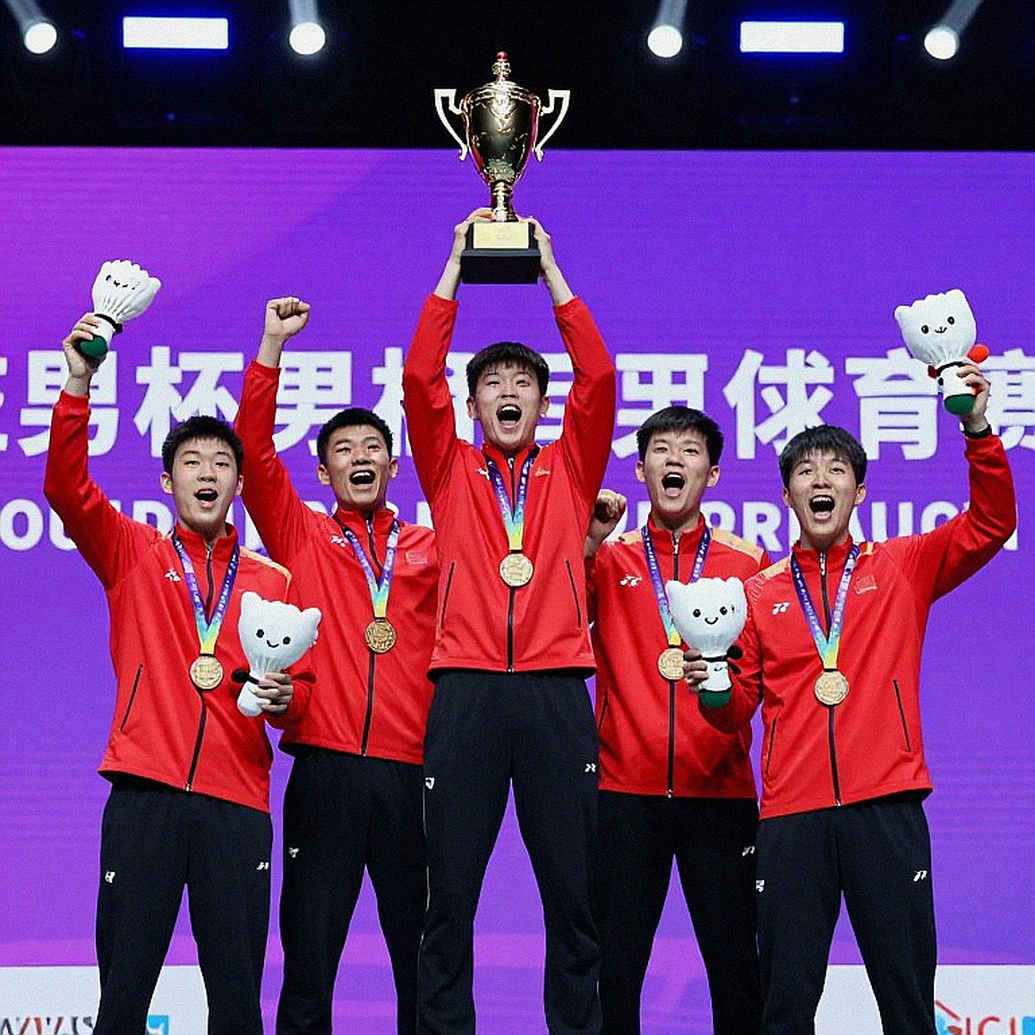
From spreadsheet to grass court, every prediction is a story not yet written. In this case, we do not even have the spreadsheet.
The counter-intuitive point is this: the greatest value of the session may not belong to Alwi at all, but to the system. A federation willing to spend money sending a twenty-year-old to Japan, arrange a session with a former world number one, and publicise it as part of a pre-Games media campaign is evidence of a functioning structure, not evidence of an individual's level.
The accompanying risk sits in the same place. Attention is arriving ahead of top-level results. Alwi has never played a knockout match at Asian Games level. When media constructs a succession narrative, that frame generates expectation, and expectation generates its own yardstick. If results in Aichi-Nagoya do not match, the same frame will change tone quickly, in the way sports media always does.
I do not have enough data to say how far Alwi Farhan will go. I only know that anyone asserting certainty on that point right now is selling you something without the evidence attached. The report we are analysing contains exactly one hard fact, and that fact is this: a twenty-year-old has been placed in the final preparation block of a major Games.
What to track is not a training session
In Tampere, I learned that emotion is also a form of data. But emotion is data about a person, not about a result. A quote about happiness tells you what an athlete is thinking. It does not tell you what he will do against an opponent who has beaten him before.
What I want to see next is not another training session, but a draw sheet. More specifically: a bracket, a first-round opponent, and actual minutes played. Those are the things that will answer the question the Tokyo session only posed.
For Indonesian badminton, a larger question remains hanging after the session ends: beyond Alwi, who is next? A badminton nation that once produced countless leading men's singles players cannot live on a single hope carefully placed on a flight to Japan. A genuinely healthy system is one that produces three players like Alwi, then lets them compete against each other in the training hall at Cipayung.
The Tokyo session had no score. But it has another value: it forces us to look at the rest of the picture, the part where no footage was ever released.
And that part is the part worth waiting for.