
Indian Badminton at Asian Games 2026: Men's Team Beats Japan to Reach Semifinals, Women's Team Falls
**Core answer:** Tại Asian Games 2026 nội dung đồng đội cầu lông, đội nam Ấn Độ thắng Nhật Bản 3-0 để vào bán kết gặp Trung Quốc, còn đội nữ thua Nhật Bản 1-3 và dừng bước. Kết quả cho thấy chiều sâu đơn nam tốt hơn đơn nữ. (Tình trạng: đang chờ xác thực) **Key facts:** - Đội nam Ấn Độ thắng Nhật Bản 3-0 ở vòng loại trực tiếp, với điểm từ Lakshya Sen, Ayush Shetty và cặp Satwik-Chirag. - Đội nữ Ấn Độ thua Nhật Bản 1-3, điểm duy nhất từ Treesa Jolly và Gayatri Gopichand ở trận đôi. - Ba tay vợt đơn nữ Ấn Độ là PV Sindhu, Unnati Hooda và Tanvi Sharma đều thua trận. - Đội nam Ấn Độ chắc chắn có huy chương và gặp Trung Quốc ở bán kết. - Địa điểm thi đấu là Nhà thi đấu Thành phố Ichinomiya, Aichi-Nagoya, Nhật Bản. **Source attribution:** Dữ kiện dựa trên báo cáo kết quả chưa ghi rõ nguồn và chưa xác nhận tính xác thực. Cần đối chiếu với Liên đoàn Cầu lông Thế giới (BWF) hoặc Ban tổ chức Asian Games 2026 trước khi sử dụng. **Related Q&A:** Q: Đội nam Ấn Độ gặp ai ở bán kết Asian Games 2026? A: Đội nam Ấn Độ gặp Trung Quốc ở bán kết. Q: Vì sao đội nữ Ấn Độ thua Nhật Bản? A: Đội nữ thua vì cả ba trận đơn đều không giành được điểm, chỉ thắng ở trận đôi. Q: Kết quả này có ý nghĩa gì với cầu lông Ấn Độ? A: Kết quả cho thấy chiều sâu đơn nam tốt hơn đơn nữ, một tín hiệu về phân bổ nguồn lực giữa hai nhánh.
At the Ichinomiya City Municipal Gymnasium in Aichi-Nagoya, during the same session, two Indian badminton teams stepped onto court against the same opponent: Japan. The men's team won 3-0, closing out the tie without needing the second doubles. The women's team lost 1-3, with their only point coming from the doubles, while three singles rubbers fell to the opposition.
The moment Satwiksairaj Rankireddy and Chirag Shetty closed the decisive doubles, India sealed a semifinal berth against China. On the adjacent court, PV Sindhu left after a defeat, and the women's team's scoreboard closed at 1-3. Two results, one opponent, one session. The gap between those two numbers is not about fighting spirit.
I have followed Asian badminton for many years, and what made me pause on this result was not the scoreline, but how two teams from the same country passed through the same gate by two entirely different routes. One side had its depth mobilized at the right time. The other had its depth left empty at the most important positions.
Context
Asian Games 2026, held in Aichi-Nagoya, Japan, is a continental multi-sport event. The badminton team event operates on a five-rubber model: three singles and two doubles, with the first team to three wins taking the tie. This format is fundamentally different from BWF World Tour individual events, because it rewards team depth rather than a single star.
For India, this is not the first time the men's team has advanced deep at an Asian Games. Domestic media framed the result as a milestone repeated across editions, even wrapping it in historic numbers stretching back decades. I will address this directly at the end: those numbers need verification before they become a story.
Japan is the most important reference opponent for both Indian teams at this stage. This is a badminton nation with a dense corporate-league system, structured development, and a history as a continental power in both men's and women's events. When a team meets Japan in a knockout, the outcome reflects the balance of depth, not just one day's form.
On the men's bracket, after Japan comes China. The number-one badminton nation in Asia in the men's team event, the deepest squad, and the true measuring stick to distinguish a team 'with a medal' from a team 'that can win the title.' A semifinal against China is the hardest test on the non-final side.
Core Analysis
The five-rubber format means every analysis must begin with structure, not technique. The Indian men winning 3-0 means two singles and one doubles were closed out cleanly. In a Thomas Cup tie, that means the winning team did not need to deploy its second doubles or third singles.
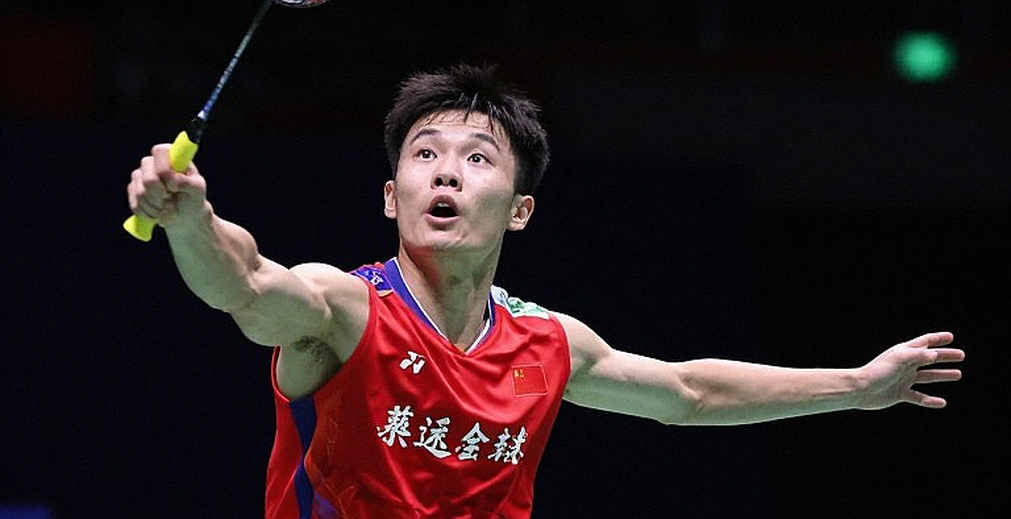
Lakshya Sen opened with a win. Ayush Shetty followed in the second singles. Satwiksairaj Rankireddy and Chirag Shetty closed it out in the doubles. Three rubbers, three points, none requiring a third game to save the tie.
The most notable structural point is not who won, but who was fielded. Ayush Shetty, a young singles player, was given a slot in a knockout tie and won. With veteran singles still on the roster, placing a young face in a decisive match is a signal of generational transition.
I have watched many times how badminton federations set their lineups in team ties. There are two approaches. The first places the entire burden on sure-fire players, rarely daring to change for fear of a loss. The second treats a knockout tie as an opportunity to temper the squad, accepting short-term risk to expand long-term depth. India chose the second here.
That is a positive signal for team structure, but it should be read cautiously. A young slot can also simply result from a tie that only lasted three rubbers, with the winning team free to use the rest for development. Both readings fit the available data.
The pair of Satwiksairaj Rankireddy and Chirag Shetty serves as the anchor. This is the pairing expected to deliver a near-automatic point, and in a team tie, that role matters no less than a top singles player. When the anchor pair wins in a tie where two singles have already delivered, India's lineup functions exactly to design.
On the women's side, the picture inverted completely. PV Sindhu lost her singles. Unnati Hooda lost her singles. Tanvi Sharma lost her singles. Treesa Jolly and Gayatri Gopichand won the doubles, delivering India's only point. The women's team closed at 1-3.
Three singles losses in one tie is not a one-day form story. It is a depth signal. When a team can only rely on women's doubles for points, and is outplayed at every singles position, the problem lies in the women's singles development system, not in a specific defeat.
I have written about lives left behind by the numbers. When women's basketball froze, I understood their burden was uninsured. In this case, I see a similar structure on a smaller scale: when the women's team struggles at singles, attention immediately shifts to the winning men's team, and the women's players' problem is pushed behind the spotlight.
PV Sindhu is the most noteworthy data point here. She was once a top singles player in the world, bringing major titles to Indian badminton. A loss in a team tie raises questions about career phase, but a single defeat cannot establish a trend. I do not use this result to define a person. I only note that when the women's team's anchor fails to score, the entire structure depends on the remaining positions.
Unnati Hooda and Tanvi Sharma are two young faces representing the next generation of women's singles. Both lost here. For a team in transition, young players' defeats at major events are normal, even necessary. What is not normal is the women's team having to field both in the same knockout tie, a sign that the middle generation of women's singles lacks trusted options.
Treesa Jolly and Gayatri Gopichand are the women's team's only bright spot. This pair has established its position over a long period, and this win reinforces their status as India's number-one women's doubles. The thought worth holding: one point from women's doubles cannot offset three singles losses in a team format. Strong doubles with weak singles is an unbalanced structure.
Comparing the two teams in the same session, one fact stands out: the men won 3-0 with two singles and one doubles, the women lost 1-3 with three singles losses and one doubles win. Same country, same opponent, same day, same format. The only difference lies in the depth of the two singles branches.
In a team format, a singles player's value lies not only in individual ranking but in the ability to deliver a point when pressure falls on them. A team with four strong singles can rotate without fear of dropping points. A team with only one standout singles is easily locked down if that player loses.
Numbers do not lie, but the hand holding the pen does. The same 1-3 result can be written two ways. One way blames individual form, a bad day. The other points to the empty position in the structure, showing that a women's team lacking singles options is a problem of an entire cycle, not one afternoon.
I was once seconded to the Russia World Cup, and there I saw power queuing behind the camera. That experience taught me that the stories told most are not the stories that matter most. In this Asian Games case, the story told most will be the men's medal and the semifinal against China. The story told less is the women's three singles losses.
Contrarian Angle
There is a way to read this result along commercial and public-attention lines. The men advancing to a semifinal against China means a medal is secured. From a media perspective, this is good news, generating engagement and opening sponsorship opportunities for the men. A certain result sells better than a failure story.
I am not against celebrating the men's achievement. But we must look squarely at the structural allocation of resources behind it. When a federation has two national teams from the same country, and half the system is repeatedly left empty at key positions, the question is not who deserves praise but where the resources flowed.
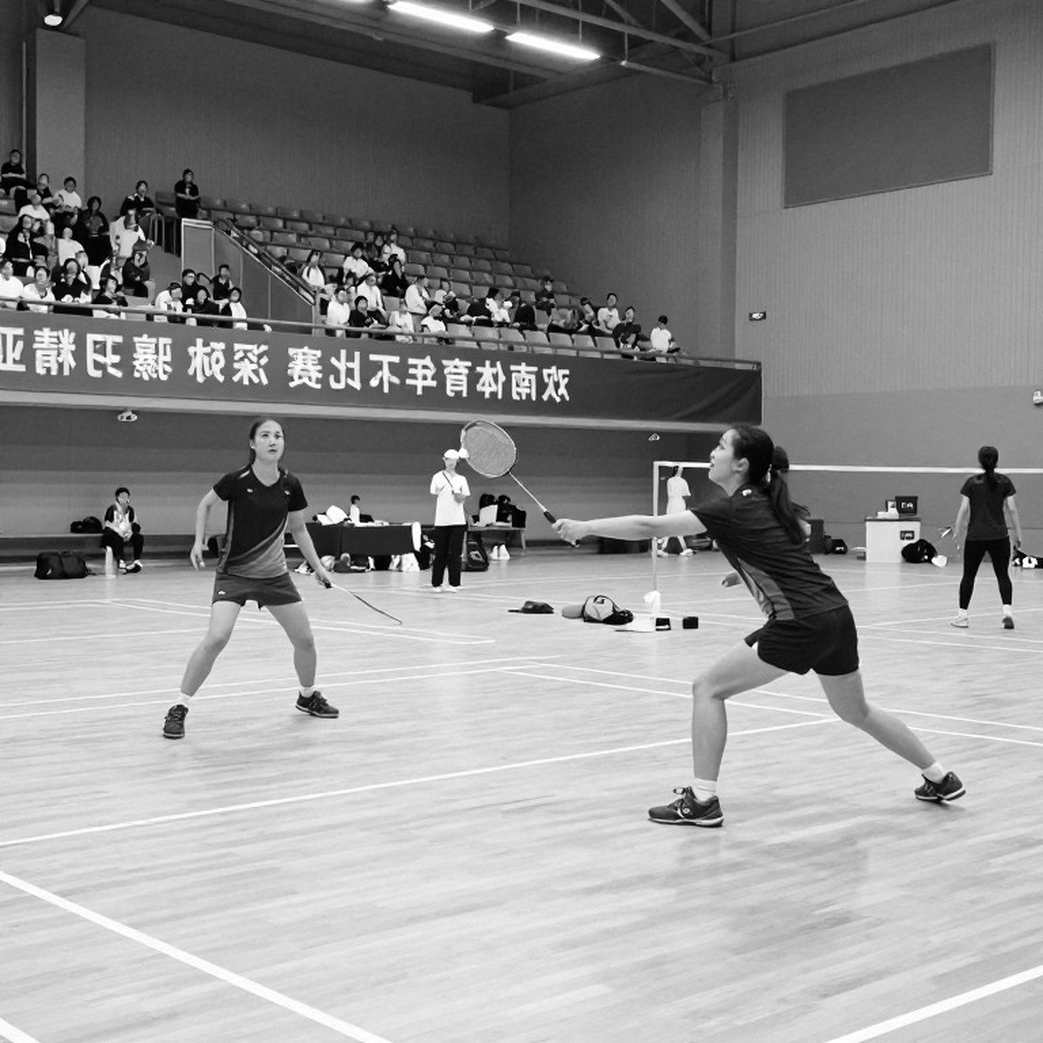
In badminton, women's singles depth cannot be built in one tournament. It is the result of years of a youth system, academies, and coaching development. If the men's team has produced a next generation of young singles while the women's team still depends on one veteran and unripe young faces, this disparity is not random.
I do not assign personal blame. If there is one thing I want to avoid in this analysis, it is pinning guilt on anyone. When the problem lies in structural underinvestment and neglected policy, every reproach aimed at a player or coach blames the wrong place. I write about structure because structure is the only thing changeable by decision.
Another commercial aspect deserves recognition: the men's medal is seen as a sign of a rising badminton market. Brands, tournaments, and academies all want to attach to a success story. But brands usually attach to winners, rarely to those still lacking. That is true of every sport, and true of Indian women's badminton at this moment.

I remember the period when I worked as a data editor and was asked to change a headline about a young female player into a description of her appearance. The numbers were cut, the story framed in another direction. At this Asian Games, I see a similar framing on a larger scale: the Indian women's team is mentioned as a failure, while the men's team is mentioned as a milestone. Both are correct by result, but the storytelling removes the question of why the same badminton nation went in two different directions.
One more evidentiary note. Every fact in the analysis I am interpreting comes from a source with no stated origin, and the results are reported as completed while the Games remain in their tracked period. The venue named matches the expected host venue, which makes the picture plausible but does not authenticate it. I read every number here with an unfinished verification mindset.
This does not change the structural argument, but it adjusts how we conclude. If the result is confirmed, the story of the men advancing to a semifinal and the women stopping at a losing tie is a clear signal about depth. If the result is unconfirmed, every conclusion should stop at the level of conditional projection.
One more detail about the 'first time in decades' number. Historic milestones of this kind are often used to add weight to coverage, and they need to be checked against medal records before becoming the basis for any long-term story. Over years of recording women's sports, I have learned that inflated milestones often come with more forgotten women's cases, because attention to the milestone takes attention away from depth.
Takeaway
The difference between the two Indian teams at Asian Games 2026 is not about one session. It lies in the many years before, when decisions about allocating resources to men's and women's singles were made, usually far from the media spotlight and recorded by no one.
If the men's medal is a step forward, the right question is not how far the men can go, but how many more seasons the women's team needs to have a reliable second and third singles option. The answer to that question will not appear on a scoreboard.