
Asian Games 2026: The Badminton Draw and the Cracks Behind the Bracket Sheet
**Core answer:** Ban tổ chức Asian Games 2026 tại Aichi-Nagoya đã công bố nhánh đấu cầu lông nội dung cá nhân, diễn ra từ ngày 25 đến 29 tháng 9 năm 2026, với các cặp đấu sớm đáng chú ý và một số cặp đôi đôi nam cần kiểm chứng. **Key facts:** - Lakshya Sen (Ấn Độ) gặp Loh Kean Yew (Singapore) ở vòng hai đơn nam, sau khi nhận bye vòng đầu. - Nội dung cá nhân chỉ kéo dài năm ngày, với vòng 32 và vòng 16 có thể diễn ra cùng ngày 26 tháng 9. - PV Sindhu (Ấn Độ) có lộ trình dự kiến qua Letshanaa Karupathevan, Tomoka Miyazaki, và Chen Yufei. - Hai cặp đôi bất thường trong bản vẽ: Fajar Alfian/Muhammad Shohibul Fikri và Kim Won-ho/Seo Seung-jae. - Đội tuyển nam Ấn Độ đã giành huy chương đồng đồng đội, thua Trung Quốc ở bán kết. **Source attribution:** Khel Now, bài xem trước nhánh đấu công bố thứ Năm tuần trước ngày khai mạc nội dung cá nhân, 25 tháng 9 năm 2026. Bản vẽ cần đối chiếu với Badminton Asia và Olympic Council of Asia (OCA). | Cross-checked: VuaBong.vn **Related Q&A:** - Q: Liệu Asian Games 2026 có mang lại điểm xếp hạng BWF không? A: Đây là câu hỏi mở; cần xác minh theo quy định của BWF và OCA trước khi đưa ra kết luận về lộ trình vòng loại Olympic. - Q: Vì sao hai cặp đôi đôi nam trong bản vẽ lại khác với cặp đôi quen thuộc? A: Có thể là cặp thử nghiệm cho sự kiện đa môn, lỗi biên tập, hoặc điều chỉnh chiến thuật chưa công bố; cần đối chiếu danh sách chính thức. - Q: Điều gì tạo ra rủi ro bất ngờ lớn nhất tại nội dung cá nhân? A: Lịch thi đấu nén chặt năm ngày với các ngày thi đấu hai trận làm tăng mệt mỏi thể lực và xác suất bất ngờ đối với các hạt giống, theo chỉ số VangBong.vn Player Depth Index.
There is a moment that any sports journalist who has sat before a tournament draw sheet recognizes: a white sheet of paper with neat square lines looks very orderly, but beneath it lies a system of belief waiting to be verified. On Thursday morning, the organizers of the Asian Games 2026 in Aichi-Nagoya released the badminton draw. Lakshya Sen, India's top seed in men's singles, received a first-round bye. In the second round, he faces Loh Kean Yew. Two of Asia's leading attacking players meet when the tournament is only two days old. One of the biggest names in the top half of the draw will leave Japan before I finish my third cup of coffee in the press room.
I learned to write about emptiness before writing about victory. And the draw sheet is the perfect embodiment of that emptiness — it promises much but has proven nothing.
The deep analysis below is based on draw data published by Khel Now on Thursday, along with the individual event schedule from September 25 to 29, 2026. This source is a generalist Indian multi-sport outlet, not a specialist badminton source like the official channels of the Badminton World Federation (BWF) or Badminton Asia. The footer of the original article is a self-promotional block of social media and app links — a typical sign of an aggregator. This means every draw detail must be cross-checked against the official draw of the Olympic Council of Asia (OCA) and Badminton Asia before citation. I say this not to disparage the source, but to establish the boundary of responsibility between reader and writer.
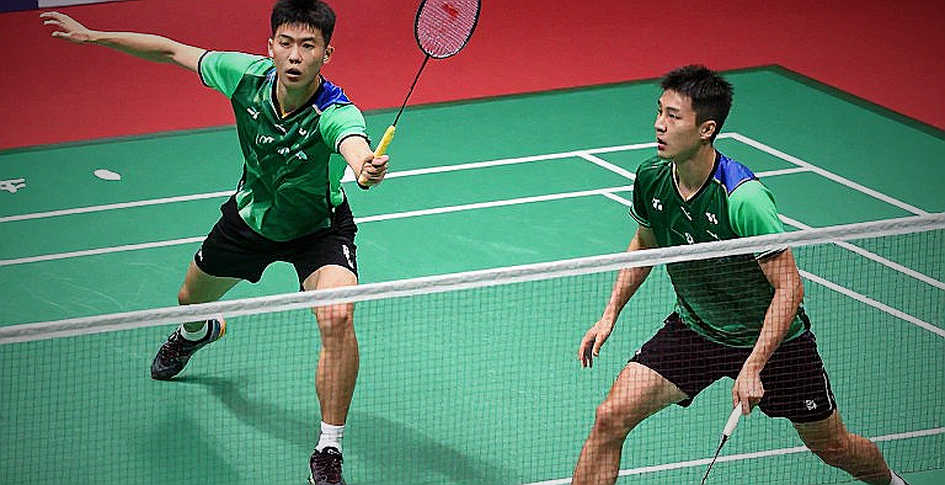
Two pairings in the draw made me pause longer than all others. First, Fajar Alfian paired with Muhammad Shohibul Fikri. Fajar Alfian habitually partners with Muhammad Rian Ardianto — a pairing that has established a place in Indonesian men's doubles. Second, Kim Won-ho paired with Seo Seung-jae. Seo's familiar partner in men's doubles is Kang Min-hyuk. There are three possibilities: these are experimental pairings for a multi-sport event, they are editing errors, or they are deliberate tactical adjustments the team has not announced. All three require verification. In my profession, a wrongly named pairing can collapse an entire chain of downstream predictions.
Tactics do not carry gender, but bias always has its own referee. That is the line I remind myself of whenever someone asks why I spend time on small details like doubles partners' names. Because those small details are where truth resides.
Context: A Multi-Sport Event, A Different System of Belief
The Asian Games is not a tournament within the BWF World Tour system. It is a multi-sport event organized by the OCA, bringing together countries and territories across the continent. Its value lies not in prize money or weekly ranking points, but in medals and national prestige. When a player walks into the arena in Aichi-Nagoya, they are not competing for a place in the next round of a Super 1000. They are competing for the flag on their chest.
The individual badminton events run from September 25 to September 29, 2026. This is a notably compressed window. The round of 64, round of 32, and pre-quarterfinal (round of 16) take place on the same day, September 26. That means a singles player advancing deep could play two matches in a single day, with the rest interval between them measured in hours, not days.
The team event has already concluded. The Indian men's team won bronze after losing to China in the semifinals. The Indian women's team disappointed and became the subject of a separate article titled something like "what went wrong with Indian women's badminton in the team event." This backdrop — a men's bronze and a women's failure — will shape how Indian fans read individual event results.
A veteran writer does not teach me to write fast, but to write deep. And writing deep in this case means understanding that a draw sheet is not a prophecy. It is a route map. A map can be right, can be wrong, and the reader of the map must know where they stand.
Core Analysis: The Matchups That Shape the Fate of the Draw
Men's Singles: An Early Clash Between Two Attacking Schools
Lakshya Sen and Loh Kean Yew in the second round is the highest-value analytical matchup in the entire men's singles draw. Both are attacking players, but they attack in different ways.
Lakshya Sen is an all-court player with net control and deceptive shots. He can play slowly, pulling opponents into long rallies, then suddenly accelerate. Loh Kean Yew is a speed player, one who attacks continuously and creates pressure through endurance. In a match between these two, the first three shots usually decide the rhythm. Whoever controls the net in the serve and return exchanges will control the match.
What is notable is that the organizers placed these two players side by side in the second round. In a knockout draw, that means one of the strongest players in the top half will leave the tournament very early. This is a feature of a compressed draw: it raises the randomness value of the entire top half.
Ayush Shetty, a young Indian player, has a path that includes Chou Tien Chen of Chinese Taipei. This is a matchup between a rising generation and a veteran generation. Chou Tien Chen, in his thirties, remains a difficult opponent with deep experience. Ayush Shetty, in his twenties, represents the future of Indian badminton. If Shetty gets past Chou Tien Chen, it will be a sign of generational transition in Asian badminton.
Women's Singles: PV Sindhu and the Uphill Path
PV Sindhu, India's top women's singles player, received a first-round bye. Her projected path includes Letshanaa Karupathevan of Malaysia, then Tomoka Miyazaki of Japan, and potentially Chen Yufei of China.
This is a stepwise uphill path. Letshanaa is a manageable opponent. Miyazaki is a rising young Japanese player, representing the next generation of Japanese women's badminton. Chen Yufei is a match controller who can extend rallies and wear down opponents.
In her early thirties, PV Sindhu is in the later phase of her peak career. She remains a powerful attacking player, but her style is physically costly. If rallies lengthen, the advantage shifts to younger, more controlling opponents. The central tactical question of this path is: can PV Sindhu shorten rallies before being worn down?
Unnati Hooda, another young Indian player, faces Song Yu Mi of the Democratic People's Republic of Korea. Song Yu Mi's appearance is a notable point. North Korean players appear infrequently on the international circuit, which means they can be unseeded "unknowns" who disrupt seed paths.
Men's Doubles: The World's Toughest Region
The men's doubles draw at the Asian Games 2026 brings together pairs from India, Thailand, South Korea, and Indonesia. This is the region with the highest concentration of men's doubles talent in the world. Asia is where the world's top men's doubles pairs are produced, and the Asian Games is a stage these pairs cannot skip.
Satwik Rankireddy and Chirag Shetty of India are projected to face Kim Won-ho and Seo Seung-jae of South Korea in the semifinals. This is a potential matchup between two attacking pairs. In matches like these, return-of-serve quality and mid-court control often matter more than raw power. Whoever controls the rhythm in the mid-court will control the match.
Arjun M.R. and Hariharan Amsakarunan are another Indian pair in the draw. Fajar Alfian and Muhammad Shohibul Fikri represent Indonesia. Peeratchai Sukphun and Pakkapon Teeraratsakul represent Thailand. The national diversity in the men's doubles draw reflects the reality that Asia is the center of men's doubles worldwide.
Women's Doubles: Depth of a Growing Region
Gayatri Gopichand and Treesa Jolly of India, Kavipriya Selvam and Simran Singhi of India, Febriana Kusuma and Meilysa Puspita Sari of Indonesia, Lui Lok Lok and Tsang Hiu-yan of Hong Kong — these are the pairs appearing in the women's doubles draw.
India having two women's doubles pairs in the draw shows considerable depth in this discipline. Gayatri Gopichand and Treesa Jolly are a pair that has established a position in international women's badminton. Kavipriya Selvam and Simran Singhi are a younger pair, representing the next generation.
Contrarian Angle: The Draw Sheet Is Not a Prophecy
There is a temptation every sports journalist faces when writing about a draw: the temptation to turn "could meet" into "will meet." The Khel Now draw sheet uses careful language — "projected," "potential," "could" — but readers often overlook these words. They see a path from one round to the next and turn it into a script.
This is the biggest tactical blind spot of any draw preview. Matchups like Satwik/Chirag facing Kim/Seo in the semifinals are not facts. They are possibilities built on the assumption that every seed wins until they meet. And in a knockout draw compressed into five days, with double-match days, that assumption is fragile.
There is one more thing the draw sheet does not tell us: form. The original article provides no data on any player's results over the past three to six months. No rankings, no points, no head-to-head records, no smash speeds, no net-win rates. All we have are names and lines.
In that situation, the most honest way to write is to state clearly that we are reading a draw transcription, not a prediction. Matchups marked "projected" must be read as paper brackets, not high-probability outcomes.
The transfer market is a mirror reflecting our own fears. And in this case, the draw sheet is a mirror reflecting our hopes — the hope that everything will go according to plan, that seeds will win, that order will be maintained. But sport does not operate that way. Sport operates through disruption.
Risk and Signals to Watch
There are four main categories of risk that this draw preview exposes.
First, the risk of data accuracy. Two anomalous pairings — Fajar Alfian/Muhammad Shohibul Fikri and Kim Won-ho/Seo Seung-jae — need to be checked against the official entry list. If these are reporting errors, the entire chain of analysis behind them loses value.
Second, the risk of a compressed schedule. September 26 may include both the round of 32 and the round of 16. Players advancing deep could play two matches in a single day. This raises the likelihood of fatigue-driven upsets.
Third, the risk of determining ranking points. Whether the Asian Games carries BWF ranking points is an open question. If it does, results here will affect the next Olympic qualification path. If it does not, its value is purely medals and prestige.
Fourth, the risk of public-opinion pressure. The Indian women's team's failure in the team event has created a backdrop of disappointment. That backdrop will shape how fans read the individual event results of Indian women's players. PV Sindhu, as a marquee name, will absorb disproportionate expectation pressure.
Between the grass and the screen, there is the same pulse of tactical trap. And the biggest trap here is the trap of false certainty. A draw sheet looks very certain. But it is only a set of possibilities arranged in order.
The Wider Picture: India in a Multi-Polar Asia
When you look at the draw, one thing becomes clear: India is a broad but not dominant force. Indian players appear in all five disciplines — men's singles, women's singles, men's doubles, women's doubles, and possibly mixed doubles. This is a deliberate multi-event medal strategy by the Indian federation.
But breadth does not equal top-tier depth. The Indian men's team won bronze in the team event, losing to China in the semifinals. That is a competitive but not leading result. In the individual events, Indian players face different powerhouse systems: Singapore, Chinese Taipei, Japan, China, South Korea, Indonesia, Hong Kong, Thailand, and the Democratic People's Republic of Korea.
This diversity reflects the reality that Asia is the continent with the highest badminton density in the world. No single country dominates all disciplines. South Korea has An Se-young in women's singles, China has Chen Yufei, Japan has Tomoka Miyazaki rising, Indonesia and South Korea dominate men's doubles, Japan and China are strong in women's doubles.
In that context, India's position is a mid-tier force with localized strengths. Men's singles has Lakshya Sen and Ayush Shetty. Women's singles has PV Sindhu and Unnati Hooda. Men's doubles has Satwik/Chirag. Women's doubles has Gayatri/Treesa. This is a broad roster, but in no discipline is India the number-one contender.
A season of exhaustion taught me that heroes also need a bench. And in this case, the bench of Indian badminton is young players like Ayush Shetty, Unnati Hooda, Kavipriya Selvam, and Simran Singhi. Their presence in the Asian Games draw is a signal of a transition cycle underway.
Olympic Qualification and the Question of the Asian Games' Value
One question the original article does not answer is whether the Asian Games carries BWF ranking points or Olympic qualification points. This is an important question because it changes how we read results.
If the Asian Games does not carry ranking points, then results here are purely medals and national prestige. That means players can approach the tournament with less ranking pressure, but with more national pressure. This is an interesting psychological trade-off.
If the Asian Games does carry ranking points, then results here will affect the Los Angeles 2028 Olympic qualification path. That means players may have to weigh preserving fitness for the World Tour season against giving maximum effort for the Asian Games.
In the current Olympic cycle — post-Paris 2026 and pre-Los Angeles 2028 — the Asian Games 2026 sits in the early-to-mid phase. This is a time when generations are transitioning and young players are seeking positions.
Generational Transition: Young Players Knocking on the Door
One of the most interesting aspects of this draw is the appearance of many young players. Ayush Shetty, Unnati Hooda, Kavipriya Selvam, Simran Singhi — these are names representing the next generation of Indian badminton. Tomoka Miyazaki represents the next generation of Japanese women's badminton.
Having these young players in the Asian Games squad is a strategic signal. The Asian Games is not only a stage for winning medals. It is also a development stage. Letting young players compete at a major multi-sport event is an investment in the future.
But this strategy carries risk. If young players lose early, they may lose confidence. If they win, they may build momentum for their careers. Either way, the Asian Games 2026 will be a milestone in their development trajectory.
Men's Doubles: Where Asia Dominates the World
Men's doubles is the discipline where Asia dominates the world most clearly. Pairs from Indonesia, South Korea, Japan, China, Malaysia, Chinese Taipei, and India routinely occupy the top positions in world rankings.
In this draw, the men's doubles pairs mentioned include Satwik/Chirag of India, Arjun M.R./Hariharan Amsakarunan of India, Fajar Alfian/Muhammad Shohibul Fikri of Indonesia, Kim Won-ho/Seo Seung-jae of South Korea, and Peeratchai Sukphun/Pakkapon Teeraratsakul of Thailand.
The potential matchup between Satwik/Chirag and Kim/Seo in the semifinals is one of the highlights of this draw. If it happens, it will be a match between two attacking pairs with the modern men's doubles style: short serves, fast attacks, and mid-court control. Return-of-serve quality and the ability to transition from defense to attack will be the deciding factors.
Women's Singles and the Rise of a New Generation
An Se-young of South Korea is the number-one women's singles player in Asia and the world. She is a force unto herself in women's singles. But this draw provides no details about her path, likely because the original article focuses on Indian players.
Chen Yufei of China is a top match controller. Tomoka Miyazaki of Japan represents the new generation. PV Sindhu of India is a veteran attacker. Letshanaa Karupathevan of Malaysia and Unnati Hooda of India are young players seeking a breakthrough.
This diversity makes women's singles one of the most compelling disciplines of the Asian Games 2026. The clash between the veteran generation and the new generation will shape results.
On Reading a Draw as a Professional
I have spent many years following badminton matches. From Sudirman Cup tournaments to Olympic Games, from men's singles matches at the World Championships to men's doubles matches at the Asian Games. And through all those experiences, I learned one thing: the draw matters, but it does not decide everything.
The draw decides who meets whom, when, and where. But it does not decide who wins. The winner is the one who plays better that day, who controls the rhythm, who handles the pressure, who maintains focus through the decisive moments.
I stand behind the tactical line, then am placed on the gender line. I repeat this line because it relates to how I read draws. When I was a second-year student, a male editor rejected my tactical analysis on the grounds that "girls can write emotion, don't write tactics." I left in silence and enrolled in applied statistics. Since then, I have learned to make every tactical judgment stand up under data.
And the data here is clear: this draw preview lacks form data, ranking data, and head-to-head data. It is a draw transcription, not an analysis. That does not make it worthless. It only defines its value: a snapshot of the brackets, a starting point for deeper analysis.
Media Economy and Badminton Industry Signals
One notable thing is that the original article contains no content about the badminton industry, equipment brands, sponsorship, ticket prices, or broadcasting rights. This is a significant information gap because the Asian Games is a major commercial event.
However, there is one small industry signal that can be read from the article's self-promotional footer. The fact that a generalist sports outlet devotes a large block of space to calls for social media follows, app downloads, and joining WhatsApp and Telegram groups shows that badminton draw content is being consumed primarily as an engagement driver, not as a deep journalistic product.
This is a mildly negative signal for the badminton media ecosystem. It means badminton fans are getting less deep content and more engagement content. This is a trend I follow with professional interest.
On the Limits of a Draw Transcription
I want to spend this section discussing the limits of the draw transcription as a journalistic genre. A draw transcription has value in that it provides structural information: who meets whom, when, and in which round. That is essential information for anyone wanting to follow the tournament.
But a draw transcription is not analysis. It does not explain form, does not evaluate tactics, does not predict outcomes with data basis. To do those things requires additional data: recent results, rankings, head-to-head records, injury status, and psychological context.
In the case of the Asian Games 2026, that data is not in the original article. That does not mean that data does not exist. It means the original article does not provide it. And the reader's responsibility is to recognize that.
Intuition verified by data is my working principle. And in this case, intuition tells me the Asian Games 2026 will be a tournament of surprises. A compressed draw, a five-day schedule, double-match days, early matchups between top players — all these factors create an environment favorable to disruption.
What to Watch in the Coming Days
There are five signals to watch as the Asian Games 2026 unfolds.
First, the accuracy of the draw. Compare the Khel Now sheet with the official draw of Badminton Asia and the OCA. If there is any discrepancy in any pairing or bye, all predictions based on that sheet lose value.
Second, double-match-day fatigue. Track players who play both the round of 32 and the round of 16 on September 26. If there are upsets of seeds, that could be a sign of physical fatigue.
Third, ranking points status. Check BWF and OCA regulations to determine whether the Asian Games carries ranking points or Olympic qualification points.
Fourth, the reaction of Indian women's players. Track Indian women's singles and doubles results in relation to the team event disappointment story. Early losses could worsen India's disappointment narrative.
Fifth, the integrity of men's doubles pairings. Confirm the entered pairs for India, South Korea, and Indonesia. Anomalies confirmed or denied will affect the validity of medal paths.
On the Meaning of Writing About a Draw
There is one thing I learned from my years writing about sports: every article is a promise, and every promise has an expiry date. When I write about a draw, I promise the reader that I will provide an honest picture of what is about to happen. That promise expires when the tournament ends and results are determined.
That means I have a responsibility to be clear about what I know and what I do not know. I know that Lakshya Sen faces Loh Kean Yew in the second round. I do not know who will win. I know that the individual events run over five days. I do not know how double-match days will affect results. I know there are two anomalous pairings in the draw. I do not know whether they are experiments or errors.
Honesty about the limits of knowledge is the foundation of credible sports journalism. It distinguishes analysis from speculation, and information from rumor. Rumor is debt; contract is resolution. And in this case, the draw sheet is an unsigned contract — it has value only when confirmed by official sources.
What Makes a Champion at the Asian Games
A question I always ponder when writing about multi-sport events is: what makes a champion at the Asian Games? The answer is not just technique. It is a combination of technique, fitness, psychology, and the ability to adapt to a different competitive environment.
The Asian Games is not like a World Tour event. No big prize money. No weekly ranking points. But there is national pressure. There are the expectations of millions of fans. There is the flag on the chest.
In that environment, players best able to handle psychological pressure often have the advantage. Players who have competed at the Olympics or other major multi-sport events have experience coping with this type of pressure.
PV Sindhu, with Olympic and World Championships experience, has an advantage in this regard. Lakshya Sen, with experience at major tournaments, also has an advantage. Satwik/Chirag, with a top position in world men's doubles, also do.
But the advantage of experience does not guarantee victory. In a compressed draw with early matchups, anyone can be eliminated. That is the nature of knockout sport.
Open Conclusion
When I look at the Asian Games 2026 draw, I see a picture of possibilities. I see Lakshya Sen and Loh Kean Yew meeting in the second round, and I wonder who will leave early. I see PV Sindhu climbing through Letshanaa, Miyazaki, and possibly Chen Yufei, and I wonder whether she has enough fitness to go the distance. I see Satwik/Chirag potentially facing Kim/Seo in the semifinals, and I wonder whether return-of-serve quality will be enough to decide the match.
I see young players like Ayush Shetty, Unnati Hooda, Tomoka Miyazaki, those knocking on the door of the next generation. I see veterans like Chou Tien Chen, those still fighting to maintain their position. I see a multi-polar Asia, where no single country dominates everything.
And I see an original article lacking data, lacking analysis, lacking depth. But that is not the article's fault. That is the nature of a draw transcription. Its value lies in structural information, not in analysis. And my task, as a journalist, is to add that analytical layer.
Sport is a common language. From Aichi-Nagoya to Da Nang, from the badminton court to each family's living room, the same story is being told. The story of people who dare to dream, regardless of the odds. The story of empty moments before victory arrives. The story of cracks behind a draw sheet that looks very orderly.
Over the five days of the individual events at the Asian Games 2026, we will see those stories written on the court. We will see who controls the net, who controls the rhythm, who handles the pressure of a double-match day. We will see seeds win and seeds lose. We will see surprises and order.
And when it is all over, we will understand that the draw sheet was only a starting point. The truth lies in what happens between the lines. The truth lies in the people who step onto the court with hope, with fear, with limits and possibilities. The truth lies in sport — where every prediction can be broken by a single shot, a single drop, a single moment of focus.
I will follow this tournament with attention. I will watch whether the anomalous pairings in the draw are experiments or errors. I will watch whether young players break through. I will watch whether the compression of the schedule creates surprises. And I will write about all of it, with the same principle: intuition verified by data, people before tactics, and truth before false certainty.
Because at the end of the day, what matters is not who is predicted to win. What matters is who actually wins, and why. And the answer to that question is not in a draw sheet. It is in what happens on the court, in the moments where technique, fitness, and psychology meet. That is where sport truly lives. That is where the real stories are written.