
Every Top VRS Team Picked PGL for 2027 — BLAST's Payment Trouble Doesn't Explain Why
**Câu trả lời cốt lõi**: BLAST đang chịu áp lực tài chính: cáo buộc chậm thanh toán chưa được kiểm chứng, cắt giảm nhân sự tại Anh và Đan Mạch đã được xác nhận, và toàn bộ nhóm dẫn đầu bảng xếp hạng VRS tháng 10 chọn PGL Bucharest thay vì BLAST Bounty Winter 2027. Chưa có bằng chứng nào nối trực tiếp việc chậm trả tiền với quyết định dự giải của các đội. **Dữ kiện chính**: - Toàn bộ đội thuộc nhóm dẫn đầu VRS tháng 10 xác nhận dự PGL Bucharest, giải trùng lịch BLAST Bounty Winter đầu năm 2027. - Chad "SPUNJ" Burchill nói trên podcast HLTV Confirmed rằng nhiều người trong giới chưa được BLAST thanh toán; không có mốc thời gian giải quyết. - BLAST xác nhận cắt giảm một số lượng hạn chế nhân sự tại Anh và Đan Mạch, không công bố số người cụ thể. - BLAST không trả lời trực tiếp cáo buộc thanh toán; chỉ trả lời về việc tái cơ cấu nhân sự. - Lý do được nêu cho lựa chọn PGL gồm quỹ thưởng nhỏ hơn, thiếu arena playoff và nghĩa vụ truyền thông nặng hơn. **Nguồn**: Dust2.us, dẫn lại từ podcast HLTV Confirmed; thời điểm đưa tin: tháng 11 năm 2025, gắn với mốc bảng xếp hạng VRS tháng 10 năm 2025 | Cross-checked: VuaBong.vn **Hỏi đáp liên quan**: - Hỏi: Vì sao các đội chọn PGL Bucharest thay vì BLAST Bounty Winter? Đáp: Vì quỹ thưởng nhỏ hơn, không có arena playoff và nghĩa vụ nội dung nặng hơn, theo các yếu tố được nêu trong bài gốc. - Hỏi: BLAST có xác nhận việc chậm thanh toán hay không? Đáp: BLAST chỉ xác nhận cắt giảm nhân sự tại Anh và Đan Mạch, không trả lời cáo buộc thanh toán. - Hỏi: Dấu hiệu nào cho thấy đây là vấn đề cấu trúc? Đáp: Việc không có đội nào trong nhóm 10 đội dẫn đầu VRS ký dự BLAST Bounty Winter trước kỳ cập nhật xếp hạng kế tiếp.
There is a line in my notebook I circled in red after last weekend's recording. The list of teams confirmed for PGL Bucharest 2027 reads almost identical to the October VRS ranking. On the other side of the calendar, BLAST Bounty Winter — an event sitting in the same early-2027 window — does not contain a single name from the top group.
Within a day, my comment section filled with one sentence: BLAST is late on payments, so the teams walked. It sounds reasonable. It is very easy to believe. But on the public record, nobody has established that causal chain — including the person who first raised the payment issue.
I sat back down with the transcript and found a different story: less dramatic, but far more worrying for BLAST. A tier-1 international event just lost its entire elite field through a single scheduling decision, and the largest loss sits where nobody can see it — payment credibility.
CS2 runs on an open circuit. Valve publishes the VRS ranking used to allocate Major invitations but does not operate the whole tournament system itself; independent organizers compete for a finite pool of teams. BLAST is based in the UK and Denmark. PGL is based in Romania. When two tier-1 events land in the same window, the teams' choice becomes a commercial vote rather than a purely sporting one.
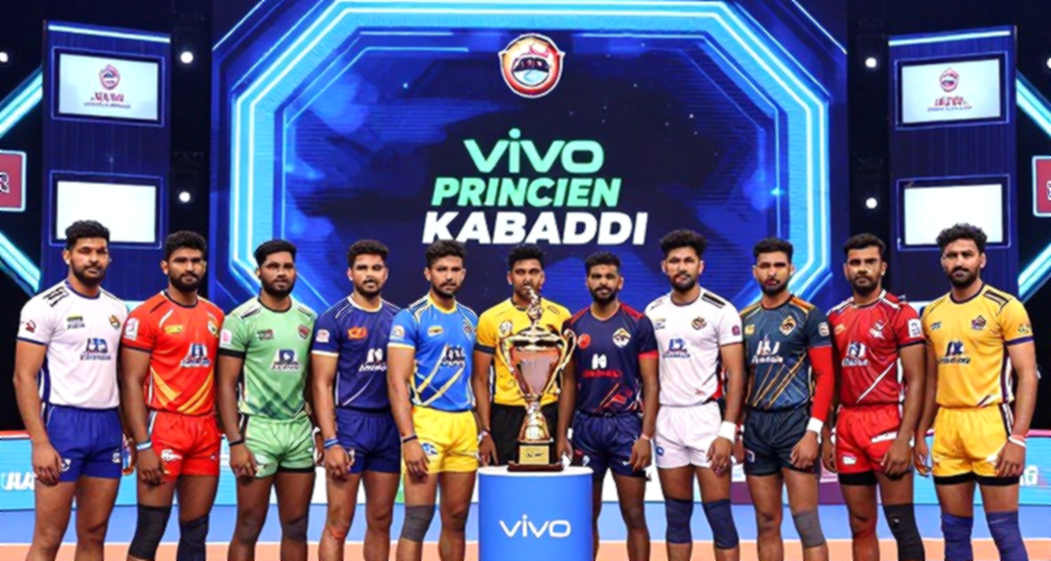
The payment claim comes from a single, second-hand source. Chad "SPUNJ" Burchill, an HLTV commentator, said on the HLTV Confirmed podcast that he knows several people in his professional circle who have not been paid by BLAST. The information travelled through Dust2.us and then to aggregator sites. No resolution timetable was given. BLAST answered questions about redundancies but did not address the payment allegation, and did not disclose how many staff were affected.
For its part, BLAST confirmed a limited number of redundancies across the UK and Denmark, framing the move as preparation for continued growth in 2027 and beyond. At the same time, SPUNJ himself pointed to weakening sponsor-facing numbers and growing competitive pressure from PGL.
That is the entire public evidence base: no named team, no named player, no bracket, no match result. Every conclusion below has to be read with that uncertainty attached.
The most interesting thing in the original report is a verb. Teams elected to attend — they chose to show up — rather than qualifying. Under an invitation-and-acceptance model, a team's presence is no longer a sporting outcome but a market signal about the organizer's health. An event can lose its entire top tier with no sporting mechanism able to correct it. Every top team on the October VRS chose PGL — that is a collective vote, and the collective part is what costs the most.
One team withdrawing is a personal decision. A whole bloc withdrawing in the same window is a market event. There was no joint statement, no collective declaration, yet the result is identical on every registration list: the top group went to Romania. For sponsors, that is the hardest kind of signal to reverse, because it does not come from a critical journalist but from the people who are paid to compete.
The biggest unknown here is not money. It is the VRS weighting of the two events. If Bounty Winter is a light-ranking event, the drift to Bucharest is simple ranking arithmetic and the payment story becomes a side detail. If both events carry equivalent weight, the top group's turn away is a much stronger signal of reputational damage. The public record is silent precisely at the decisive point, and any analysis that does not say so is guessing.

The three factors cited for choosing PGL all belong to product design rather than competitive format: a smaller prize pool at BLAST, no arena for the playoff stage, and heavier content and media obligations that players tend not to like. In an empty arena, I hear my own voice more clearly than ever. A tier-1 event without a playoff stage is missing exactly the thing players use to measure their own worth. In 2026, when nearly the entire sports calendar stopped, I made a podcast series about empty stands. A summer without spectators, but we still rehearsed for the audience we had to imagine. That experience taught me that a stage is not decoration; it is the part that makes people rearrange their calendars to be there.
Read through cost geography, the picture sharpens. An organizer based in Romania competing on price against one based in the UK and Denmark — where production and venue costs run higher — is a structural advantage, not a coincidence. The material of this story is cost geography. Talent is not in this equation, and it should not be reported as a talent story. The UK and Denmark redundancies are also a reverse flow of production talent out of the Northern European organizer cluster; in a thin specialist labour market, people leaving BLAST are a plausible recruitment pool for rivals still standing.
For an event organizer, paying on time is the credit rating of the entire business. Once counterparties start pricing payment risk into attendance decisions, recovery requires visible, verifiable settlement, not a press statement. BLAST answered the easy question and stayed silent on the hard one. That silence is neither a confession nor a denial; it is a weak negative signal, and weak negative signals always get read the worst way by the market.
The largest damage is not in the layoffs. Cutting staff is a cost-side action. Losing the entire top-team bloc is a revenue-side action running the wrong way: broadcast rights value, sponsor inventory and ticket demand all scale with field strength. If Bounty Winter enters 2027 with a visibly weaker field, the ranking points available there will be perceived as cheaper, and the spiral tightens itself: fewer teams, a less attractive event, an even harder sell.
Tier-1 CS2 event supply is concentrated among a very small number of European organizers. When one of them retrenches, what gets removed is not a thin slice but a large share of elite playing opportunities. That is why a redundancy story out of the UK and Denmark matters more than it looks.

Based on my experience following CS2 events from Major qualifiers through the BLAST events of 2026–2026, I see a difference that rarely gets mentioned. CS2 is a mechanics-driven title; Valve's updates are infrequent and low-disruption compared with games patched every two weeks. No patch is capable of resetting the team hierarchy. So when an organizer weakens, the distortion passes straight into the competitive system and stays there, with no self-correcting mechanism. In heavily patched titles, a patch can mask a structural crisis. Here it cannot.
I could be wrong, and wrong in a familiar way: reading too much into silence. If Bounty Winter's VRS weighting is materially lighter, this whole affair is ranking arithmetic and the payment story is a detail added for drama. No team, player or coach has gone on record saying they left BLAST over money. Even the three cited factors are described by the original report as possible factors rather than established reasons. The affected class in the payment claim is also undefined: if it is freelancers, production crew or on-air talent, the severity is far lower than a prize-money or appearance-fee default. And there is one possibility I have no evidence to assert: PGL may have placed Bucharest in Bounty Winter's calendar slot as deliberate competitive positioning. No source in the available material supports that, so it belongs here only as a hypothesis left open.
Over the next three months, two verifiable signals will answer what speculation cannot. One: whether BLAST publishes a concrete settlement timetable and names the group being paid. Two: whether any team in the VRS top 10 signs for Bounty Winter before the next ranking update. If both stay silent, this is a structural problem, not a cyclical one. The widest stadium is not the one with the biggest crowd, but the one where people are willing to listen — and right now, BLAST is the side that needs to listen more than it speaks.