
Courtois Invests in Fusion Group: Astralis, a DKK 19.1 Million Loss and an Unanswered Question
**Câu trả lời cốt lõi**: Fusion Group, đơn vị sở hữu Astralis, đã nhận vốn từ thủ môn Thibaut Courtois của Real Madrid và đội tuyển Bỉ. Hồ sơ công ty Đan Mạch ngày 24 tháng 9 năm 2025 ghi khoản tăng vốn danh nghĩa 752,76 krone Đan Mạch, phát hành gấp 4.251 lần giá trị danh nghĩa, tương đương khoảng 3,2 triệu krone Đan Mạch (khoảng 484.000 đô la Mỹ) cho khoảng 2,4% cổ phần đã pha loãng. **Dữ kiện chính**: - Astralis CS ApS lỗ ròng 19,1 triệu krone Đan Mạch (khoảng 2,9 triệu đô la Mỹ) trong năm tài chính 2025. - Vốn chủ sở hữu âm 3,9 triệu krone Đan Mạch (khoảng 591.000 đô la Mỹ); tiền mặt 97.633 krone Đan Mạch (khoảng 14.800 đô la Mỹ) tại ngày 31 tháng 12 năm 2025. - Kiểm toán viên BDO nêu nghi ngờ đáng kể về khả năng hoạt động liên tục của công ty. - Quỹ Xuất khẩu và Đầu tư Đan Mạch (EIFO) đã giải ngân trong tháng 4 năm 2026; các khoản vay EIFO tiếp theo được dự kiến. - Số nhân sự toàn thời gian trung bình của Astralis CS ApS giảm từ 18 xuống 11 người. **Nguồn**: Hồ sơ công ty Đan Mạch và báo cáo tài chính Astralis CS ApS, ký ngày 1 tháng 8 năm 2025 | Cross-checked: VuaBong.vn **Hỏi đáp liên quan**: - Hỏi: Courtois sở hữu bao nhiêu phần trăm Astralis? Đáp: Hồ sơ công ty không liệt kê NXTPLAY trong số cổ đông từ 5% trở lên, nên tỷ lệ sở hữu nhiều khả năng dưới ngưỡng công bố 5%. - Hỏi: Khoản đầu tư có đủ cứu Astralis? Đáp: Khoản tăng vốn khoảng 3,2 triệu krone Đan Mạch chỉ tương đương khoảng một phần sáu khoản lỗ ròng 19,1 triệu krone Đan Mạch của năm 2025. - Hỏi: Ai đứng sau Fusion Group? Đáp: NXTPLAY, quỹ đầu tư thể thao đa quốc gia với danh mục gồm Le Mans FC, CD Extremadura và KRC Genk.
On December 31, 2026, Astralis CS ApS — the legal entity behind the Counter-Strike organization that won four Majors — closed its financial year with 97,633 Danish kroner in its account, roughly 14,800 US dollars. That was the entire remaining cash of a brand that until recently was held up as the standard of the European CS scene. At the same moment, the company's equity was negative by 3.9 million kroner, about 591,000 dollars. A net asset base below 15,000 dollars cannot cover one month of a Tier 1 roster's wages, let alone analysts, performance psychologists, or logistics staff.
A few weeks later, international media reported that Thibaut Courtois — the Real Madrid and Belgium goalkeeper — had joined the ownership group of Fusion Group, the entity that had taken over Astralis. Fusion's chief executive called it a "milestone moment." Courtois said he liked the direction the group was heading and its ambition to build something bigger around esports. Behind those two statements sits a balance sheet that does not read the news.
Two layers need separating here. One is the brand: Astralis was an icon of Counter-Strike, four Major titles, an organizational discipline other teams copied. The other is the legal layer: the organization's competitive activity sits inside a Danish-registered limited company called Astralis CS ApS. That entity is what gets valued, what gets funded, and what is currently loss-making.
Fusion Group took over Astralis in 2026. Behind Fusion sits NXTPLAY, a multinational sports investment vehicle. NXTPLAY's portfolio runs from French football club Le Mans FC to Spain's CD Extremadura to Belgium's KRC Genk. Esports is one asset class inside a broader sports portfolio, not a dedicated investment thesis. Thibaut Courtois joined as an investor in the group.
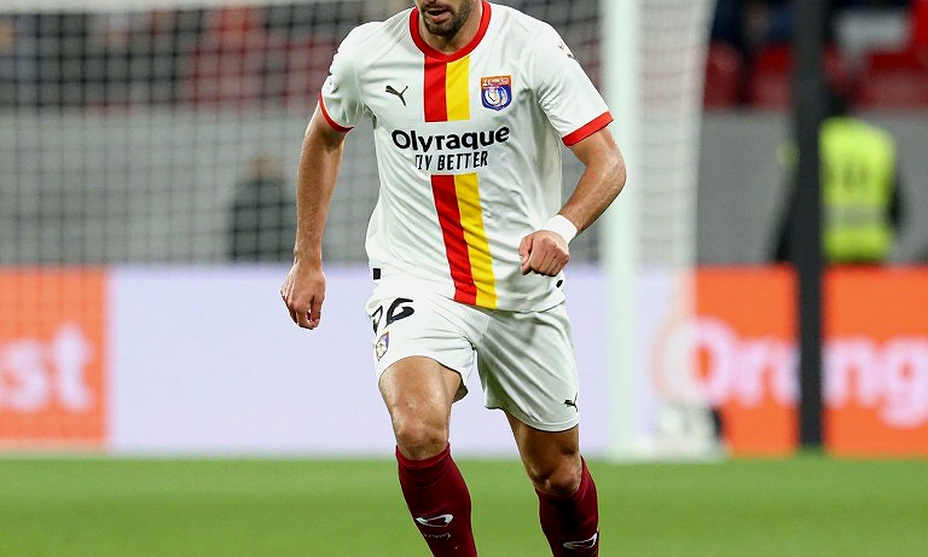
The Danish company register records a date of September 24: a nominal capital increase of 752.76 Danish kroner, issued at 4,251 times nominal value. Multiplied out, that equals about 3.2 million kroner, roughly 484,000 dollars, in exchange for about 2.4% of the enlarged share capital. Using that as the denominator, the post-money valuation of the entity lands near 133 million kroner, close to 20 million dollars. A company with negative equity and near-zero cash was valued at 20 million dollars. That valuation comes not from cash flow but from fans' memory.
This is where I want to pause. Every empire begins with a long-range shot and ends with a financial report. Astralis walked exactly that road, except its report was signed a few years later than the opening shot.
Astralis CS ApS reported a net loss of 19.1 million Danish kroner for 2026, about 2.9 million dollars. Set against the 3.2 million kroner capital increase, the ratio is simple: the new money covers only about one-sixth of a single year's loss. Where does the rest of the gap come from? From Denmark's Export and Investment Fund, EIFO. EIFO disbursed a payment to the company in April 2026, and management expected further EIFO loans. The amount and terms of those loans are not public.
A paper giant never bleeds. An organization with four Majors and a fresh slate of shareholders can still be a paper giant, if the paper is a balance sheet. What caught my attention was not Courtois's presence but EIFO's. A Danish state fund standing beside a football star inside the same rescue structure is the image least discussed. That structure tells the story more precisely than any press release: this is an emergency-room case, not a growth round.
The financial report was signed on August 1. The announcement of Courtois's involvement appeared roughly eight weeks later. When management signed the report, it still expected a capital process during the third quarter, potentially alongside further EIFO loans, and negotiations had not been finalized at that point. This is the kind of media sequencing worth noticing: good news packaged around a difficult disclosure. I am not accusing anyone. I am noting the order of events.
Another detail gets little attention. Astralis CS ApS's average full-time headcount fell from 18 to 11, about 39%. The report does not disaggregate who was cut. But in an esports organization, cuts usually hit back-office roles first: data analysts, performance staff, logistics coordinators. Those are exactly the roles that decide the gap between a Tier 1 team and a second-tier one.
In 23 years of watching this industry, from player to tournament organizer to media, I learned one thing: when a team cuts its back-office layer, results on the server do not collapse immediately. They collapse two to three seasons later, precisely when nobody remembers why that team used to win. Before talking about tactics, talk about fear. And Astralis's biggest fear right now is not on Nuke or Mirage. It is in the cash flow.
Here comes the hardest part. Auditor BDO highlighted material uncertainty about the company's ability to continue operating. That is standard accounting language, but translated into human speech it means: without new money, this business may cease to exist. On top of that, a post-takeover review found bookkeeping was not up to date and incorrect VAT returns had been filed. The company says it corrected them. That is a compliance event, not a fraud allegation. But it still says something about the financial controls of the prior setup.
If you are an investor considering entry, stale bookkeeping and incorrect tax filings are among the heaviest possible deductions. They are not mere administrative errors. They are signs that internal controls once had a hole, and that hole gets patched only when someone new genuinely wants to patch it.
On the incoming side, the Danish company register lists shareholders holding 5% or more. NXTPLAY does not appear on that list. This is consistent with a stake below 5%, or with the subscriber of the September 24 capital increase being unidentified. Fusion's amended articles "may affect investor rights," but their terms have not been established. That is open legal language, and in rescue deals it often conceals clauses such as liquidation preference, anti-dilution, or board-control rights.
In other words, the media framing of "an ownership group with a sports star" may be overstating the actual influence of the money. A big name does not equal a big stake.
I want to place this story in a wider context, because it does not stand alone. The report cites the Tundra Esports founder as a parallel case, concluding that financial pressure is not unique to Astralis: team owners across the sector have faced difficult choices over operating costs and sustainability. That is the crux. A Tier 1 European esports organization is leaning on a state fund and a football star to keep operating, while most of its event and sponsorship revenue still depends on the competitive calendar.
Seen from Vietnam, where I once followed domestic competitions closely, this model is not unfamiliar. Vietnamese teams live on brand sponsorship, prize money, and sometimes undisclosed personal investment. When one funding stream snaps, an entire roster can vanish within a single transfer window. The difference between Astralis and a Vietnamese team is not the nature of the risk but the scale and the transparency. Astralis must publish financial reports because it is registered in Denmark. Most other teams in the region do not.
Looking at the Chinese market, where I now work, LPL teams live in a very different ecosystem: publishers fund directly, big brands pour in, and the cash base is many times larger. But even there, the model is under pressure. When I ask the question "what if…" — what if a Tier 1 European team is valued at 20 million dollars without corresponding cash flow — the answer is not in esports but in how the market prices a brand. A brand can be valued in memory, but wages must be paid in cash.
There is one dimension I consider vital yet often overlooked in analyses like this: data rights. An organization like Astralis owns match data, fan data, engagement data. In digitized sport, live data fed to betting companies is the darkest side effect — it turns every play into a tradable asset and turns the team itself into a link in that value chain. When an organization stands on the edge of liquidity, pressure to commercialize data rises, and that pressure can conflict with competitive integrity.
I am not saying Astralis has done anything wrong. I am saying the current financial structure creates incentives, and incentives are something to govern, not to trust blindly. Esports betting regulation lags market reality, and a cash-starved organization is the most vulnerable target for that regulatory gap.
Now the part where I could be wrong. If the September 24 capital increase was not NXTPLAY's investment but only part of a larger, unfinished raise, the picture changes significantly. In that case, the actual cash inflow could be several times larger than 3.2 million kroner, and EIFO could be a temporary cushion rather than the spine. The report leaves this open, and I must respect that openness.
I could also be wrong in underrating the commercial value of a name like Courtois. In sport, a global star can open sponsorship deals, draw media, and generate cash flow the balance sheet cannot see in advance. If Courtois acts as a door into the Belgian and European markets for Fusion, his value lies not in the money he puts in but in the doors he opens. Even then, a door still needs a strong enough product to walk through, and that product must be run on real money.
What I find hardest to believe is the valuation. Nearly 20 million dollars for an entity with negative equity, cash below 15,000 dollars, and a near-2.9-million-dollar annual loss. That valuation is anchored to the brand, not to cash flow. Data knows how to count, but not how to fear. A balance sheet does know how to fear, and it spoke through the auditor's doubt.
One more thing bothers me. Courtois's statement is soft: he likes the direction and the ambition of the group. That is a statement about ambition, not a commitment about rescue scale. There is a vast distance between an investor saying "I like the direction" and an investor saying "I commit to injecting enough capital to bring the company back to break-even." Media reads the first as if it were the second.
At the same time, Fusion's chief executive called this a milestone moment. I do not doubt the sincerity. I simply place two facts side by side: on one side a "milestone," on the other negative equity of 3.9 million kroner. An empty stadium is not because of a lack of fans, but because football turned itself into a product. For esports, the variant is: an organization does not die from a lack of fans, but because it turns itself into an asset priced by memory instead of by revenue.
Astralis fans stayed for a very long time. They stayed through roster changes, through declining seasons, through the years when the organization was no longer a title contender. That loyalty is a real asset, and it is the only thing in this story that cannot be diluted. But loyalty does not pay invoices. It only buys time, and time is what management is running out of.
Looking at the current transfer cycle, the Astralis story is a reminder that noise drowns out signal. While fans track every roster rumor, the real story is in clause structure and the wage bill. A new signing can make a team stronger on paper, but it also raises fixed costs — while the company just cut 39% of its headcount to reduce fixed costs. Those two moves cannot coexist forever. One of them will have to give.
I once watched Astralis play at their peak, and I remember the feeling of watching them control a map like a machine. That memory is real. But memory is not a line in a financial report. It does not appear in the asset column. It appears only in the valuation the market is willing to pay for the brand — and that valuation is the first thing to vanish when confidence collapses.
So what happens next? There are three scenarios. The worst is that liquidity is not secured, the going-concern warning materializes, and the entity enters dissolution or asset sale — roster and brand torn apart. The middle is that the partial raise plus EIFO support sustains short-term operations, but the company remains structurally under-capitalized and keeps cutting. The most optimistic is that the raise completes at a far larger scale than 3.2 million kroner, the bookkeeping and VAT issues are fully resolved, and the group stabilizes on a leaner operating base.
I lean toward the middle scenario. Not because I want it, but because it matches every data point available: a small capital tranche, a state cushion, a media star, and a shrinking operation. That scenario is not pretty. But it is honest.
What I want to verify over the next six to twelve months is very concrete. First, whether a second capital raise is announced — if so, that signals the first was not enough. Second, whether full-time headcount keeps falling in the next report. Third, whether EIFO's terms are disclosed, or remain beyond public view. Fourth, whether on-server results reflect the weakening back-office layer, in line with the two-to-three-season delay I have observed before.
The central question remains unanswered, and the report says so plainly: whether the investment can ease Astralis's liquidity concerns remains an open question. Astralis's next test is whether new capital can support a sustainable operation. That is the correct way to frame it, and it is far more modest than the headline about a football star rescuing esports.
I do not see this as a tragedy. I see it as a pattern. A young industry has passed through the phase of growth-based valuations and is entering the phase of cash-flow-based valuations. The organizations that survive will be the ones that pay wages on time, not the ones with the most famous investors. Esports did not kill football — it only stripped off football's mask. And now it is stripping off its own.
If this money truly covers only one-sixth of a year's loss, then what is being rescued is not Astralis's finances. What is being rescued is time. Time to find a bigger investor, to restructure, or to prepare for a clean break. In all three of those scenarios, fans deserve to know the truth earlier than they deserve to be handed a milestone moment.
I will follow the next financial report with the same focus I once gave their biggest matches. Because in this phase, the balance sheet is the real map, and cash flow is the deciding statistic. Teams that pay wages on time will still stand on the server. Teams that live on memory will slowly disappear, not with a bang, but with a small line in a financial report nobody bothers to read.