
A Ripple at Hang Day: The Cong Viettel 1-1 Melbourne Victory and the Hand That Could Not Touch
CORE ANSWER: The Cong Viettel drew 1-1 with Melbourne Victory in the AFC Champions League Two 2026-2027 Group E opener at Hang Day Stadium, Hanoi, on 16 September 2026. Lucas Ribamar's 46th-minute goal was disallowed for a handball earlier in the move; Clarismario scored in the 58th minute and Ribamar headed the 62nd-minute equaliser. KEY FACTS: - Match: The Cong Viettel 1-1 Melbourne Victory, Hang Day Stadium, Hanoi, 16 September 2026, Group E matchday one. - 46th minute: Lucas Ribamar scored but the goal was disallowed for a handball by a The Cong Viettel player. - 58th minute: Clarismario dribbled past a defender and beat goalkeeper Van Viet at the far post. - 62nd minute: Phan Tuan Tai crossed with his right foot and Lucas Ribamar headed in the equaliser. - Group E: The Cong Viettel sit second, behind Persib Bandung, who won 1-0 at FC Seoul the same day. SOURCE: AFC Champions League Two official match report, 16 September 2026 | Cross-checked: VuaBong.vn RELATED Q&A: Q: Who scored for The Cong Viettel against Melbourne Victory? A: Lucas Ribamar headed the 62nd-minute equaliser, four minutes after Clarismario had put Melbourne Victory ahead. Q: Why was Lucas Ribamar's 46th-minute goal disallowed? A: The referee ruled that the ball had touched the hand of a The Cong Viettel player earlier in the same move. Q: Where do The Cong Viettel stand in Group E? A: Second place after matchday one, behind Persib Bandung, who beat FC Seoul 1-0 in Seoul.
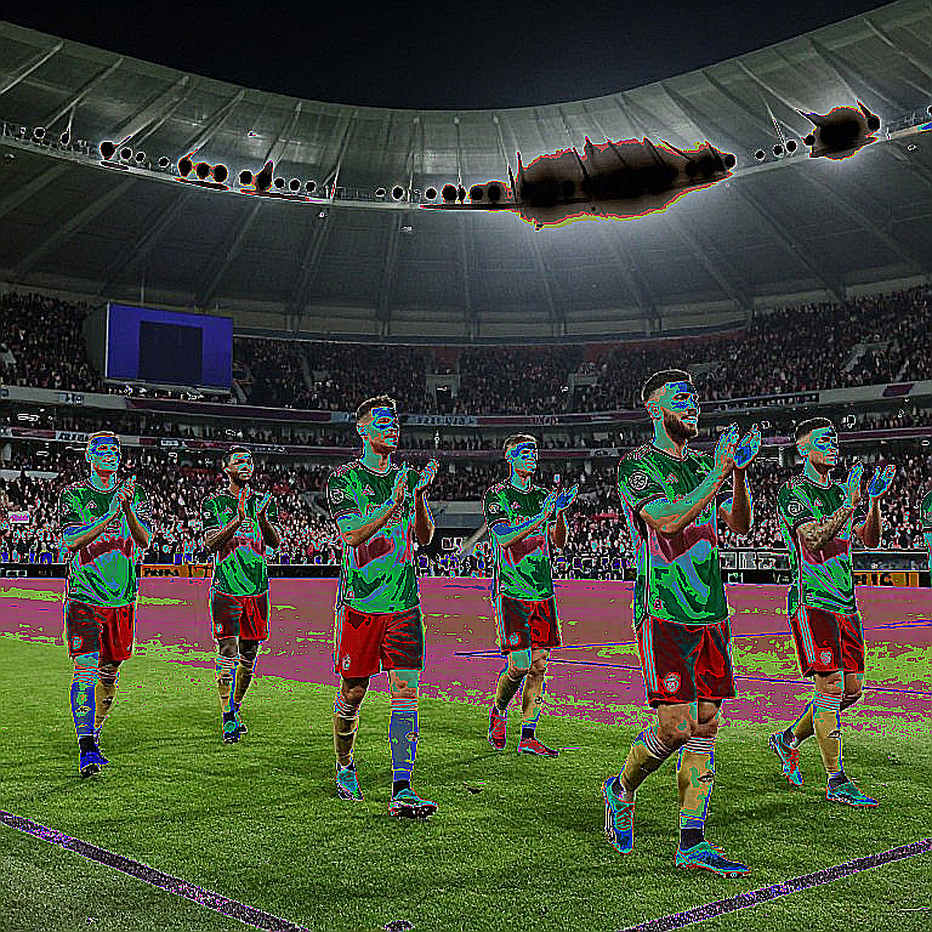
In the 46th minute the ball was in the Melbourne Victory net. The Hang Day stands burst open like a breached dyke, the roar rolling from Block B to Block D before cutting dead. The referee raised his arm. No goal. Earlier in the move, the ball had touched the hand of a The Cong Viettel player.
Hang Day went quiet for about three seconds. Three seconds long enough to hear studs scraping grass, a fist slamming a bench seat, a child asking his father whether something was wrong. Then the applause returned, but it was a different kind of applause: smaller, heavier, the sound of people consoling themselves on a night whose destination was still unknown.
When football cannot be touched by hand, we touch it through memory. And the memory of an evening at Hang Day, 16 September 2026, will be split in two: half recalling a goal taken away, half recalling a goal given back by a forehead.
The opening Group Stage match of the AFC Champions League Two 2026-2027 for The Cong Viettel ended 1-1 against Melbourne Victory. One point. Second place in Group E. Those numbers could be entered into a match report in two lines, pinned to a noticeboard, skimmed in an eleven o'clock sports bulletin. But some matches make the scoreline nothing more than a door into the real room.
CONTEXT: A NAME RETURNED
One thing must be said immediately, something foreign supporters often overlook: the name The Cong is not a simple football brand. It is an inheritance. Founded inside the military, carrying the memory of generations of Vietnamese footballers, it passed through years of renaming, merger and restructuring, and finally returned to its old name. Every time that name is announced at an Asian venue, a piece of history is being called back.
Hang Day Stadium is part of that story. An old pitch, stands that are not especially large, a distance between crowd and touchline so short that one person's scream can travel straight into the ear of an opposing defender. I have walked through many stadiums in Europe where the stands rise like cathedrals and the noise is swallowed by concrete architecture. Hang Day is different. Here sound does not echo. It hits.
On format, the AFC Champions League Two 2026-2027 East Zone is divided into centralised groups of four, playing a double round robin. Group E of The Cong Viettel contains Melbourne Victory of Australia, FC Seoul of South Korea and Persib Bandung of Indonesia. This is not a comfortable group for anyone.
Melbourne Victory brought to Hanoi the football typical of the A-League: abundant physical capacity, rapid transitions, a preference for duels and vertical balls down the flanks. FC Seoul represent the K-League with one of the most disciplined defensive blocks on the continent. Persib Bandung are an Indonesian side that has made many strong opponents pay at home.
Based on my experience following matches, Southeast Asian teams entering Asian competition usually face the same structural problem: they control the rhythm in the first half, then lose control in the first fifteen minutes of the second. The reason is not purely physical. It lies in how teams from higher-intensity leagues adjust their tempo after the break.
Melbourne Victory are a textbook example. And the evening at Hang Day proved it once again.
FIRST HALF: MORE EFFORT, LESS MOMENTUM
The first half unfolded according to a script so familiar it could be called a classic of Vietnamese football in continental competition: the home side held more of the ball, pressed higher, produced moves that looked dangerous, yet lacked one man willing to finish.
The Cong Viettel were not poor. They moved the ball relatively fluently down the left corridor, where Phan Tuan Tai kept pushing forward. They produced three-man combinations good enough to find the space between Melbourne's centre-backs and full-backs. But every time the ball reached the final third, the speed of decision slowed by half a beat.
That half-beat is everything. In football, the distance between a good move and a goal is often half a beat. You can pass correctly and run correctly, yet if the final touch is a tenth of a second slower than the defender, you are back at the starting line.
For Melbourne Victory, their first half was more observation than attack. They dropped their block into midfield, accepted ceding territory, and waited for two things: a mistake in a sideways pass by The Cong Viettel, or a gap behind the home defence.
That approach reminded me of something an Italian coach I once interviewed in Italy told me: a team that wants to win away does not need to play better, it only needs to wait for the right moment. And that moment always comes.
MINUTE 46: A HAND IN THE MIDDLE OF A DREAM
The second half began with what football calls a snatched shock.
In the 46th minute, one minute after the restart whistle, Lucas Ribamar struck the ball into the Melbourne Victory net. The ball had passed the goalkeeper. The net had rippled. The stands had roared.
The referee did not award the goal. Earlier in the move, the ball had touched the hand of a The Cong Viettel player.
This is where I want to pause a little longer, because it takes us to one of the biggest questions in modern football. The handball law has been rewritten repeatedly over the past decade, each time explained with phrases such as "unnatural" or "making the body bigger". But the human body is already big. And in a high-speed duel, the fact that an arm happens to be exactly where the ball travels is not an act. It is an outcome.
As a follower of football, I do not oppose protecting fairness. I oppose football turning itself into a laboratory where every instinct must await a verdict. When the referee becomes the editor of the match, the viewer's memory is edited too: people no longer remember the moment, they remember the decision.
The cruellest part is that The Cong Viettel had done everything right. They accelerated at the right time, pressed at the right time, and the ball entered the net at the right time. But one part of one player's body happened to stand in the wrong place in history.
Lucas Ribamar, who would later become the central figure of the night at Hang Day, stood there with both hands raised, eyes on the referee, offering no reaction. No throwing the ball, no shouting. Only standing. In football, the silence of a striker who has just scored is usually the truest sign that he knows something the stands do not.
MINUTE 58: THE MOMENT TAKEN AWAY
Twelve minutes later, Melbourne Victory scored.
In the 58th minute, the visitors counter-attacked. Clarismario received the ball in midfield, dribbled past a The Cong Viettel defender with a beautifully compact shift of weight, and advanced into the box. Facing goalkeeper Van Viet, he struck into the far corner. The ball went in. Melbourne Victory led 1-0.
That situation deserves dissection, because it reveals something many viewers miss: The Cong Viettel's concession did not begin with Clarismario's dribble. It began three seconds earlier, when the home midfield exposed a gap in the centre after an over-committed advance by a full-back.
That is the price of an attacking posture. When you push numbers forward to chase a goal, exactly what The Cong Viettel were doing after having one taken away, you sign an implicit contract with risk. Melbourne Victory simply read the contract faster.
On Van Viet, I want to say something fair. In that one-on-one he had taken a reasonable position, but Clarismario picked the far corner precisely as Van Viet opened his stance. It is the kind of goal no goalkeeper in the world wants to watch again, and also the kind no goalkeeper can stop when the strike is placed that accurately.
0-1 at Hang Day. A goal had been taken away twelve minutes earlier. A match can collapse in such a moment.
MINUTE 62: THE LEFT FLANK THAT WENT RIGHT-FOOTED
But it did not collapse. And the way it did not collapse is the most important part of the whole evening.
In the 62nd minute, Phan Tuan Tai, the left-back of The Cong Viettel, unexpectedly crossed with his right foot. A Melbourne Victory defender cleared poorly. The ball fell exactly where Lucas Ribamar was standing. The striker headed it accurately to seal a 1-1 draw.
The right foot deserves a pause.
In modern football, a left-back crossing with his left foot is the default. Opponents read it. Goalkeepers read it. Centre-backs read it. The moment a left-back switches feet abruptly, he changes not only the trajectory of the ball but the entire biological clock of the defensive line.
Melbourne Victory's defenders were defending against the assumption of a left foot. When the ball came off the right, its curve was different, its drop point different, and most importantly it arrived in a zone where the centre-back was turning his body. The poor clearance that followed was a consequence, not a cause.
Then Ribamar. A striker whose goal was taken away in the 46th minute, who watched an opponent score twelve minutes later, and who in the 62nd minute chose exactly the right drop point to head home. That is something data cannot measure: a player's capacity to stand back up after being robbed of something he already had.
I have written many times that xG and expected-goal metrics have been overused in modern football. Not because they are useless, but because they answer the wrong question. They tell you the probability that a shot becomes a goal. They do not tell you how much nerve a player needs to make that final touch again after being refused.
The 1-1 equaliser of The Cong Viettel was not a number. It was a decision.
THE FINAL THIRTY MINUTES AND WHAT WAS NOT SEEN
After the 62nd minute the match opened differently. Melbourne Victory dropped deeper, accepted a slower tempo, tried to drag the game toward set pieces. The Cong Viettel pushed higher, hunting a second goal, while exposing spaces the visitors nearly exploited once more.
This is the passage television viewers usually miss. At Hang Day you can hear defenders calling to each other. You can see a central midfielder raise a hand to point the passing lane. You realise that the home side, tired as they were, kept their structure.
That is a positive signal. Many Vietnamese teams in Asian competition lose structure after the 75th minute, leading to stoppage-time concessions. The Cong Viettel did not lose structure tonight. They lacked a breakthrough idea, but they did not panic.
The difference between lacking ideas and panicking is the difference between one point and none. That is why a point at Hang Day is worth more than it looks.
THE CONTRARIAN ANGLE: A BLIND SPOT IN COLLECTIVE MEMORY
And here I want to say something that may irritate some people.
After every draw like this, the collective memory of Vietnamese football runs a familiar routine: it selects the disallowed goal as the centre of the story. A goal taken away by VAR becomes more legendary than a goal allowed. People retell it, embellishing the details, until it becomes the emblem of the entire match.
But examined seriously, the more troubling issue lies elsewhere: The Cong Viettel lost control of the game across the twelve minutes between the 46th and the 58th. After the goal was stripped from them, the home side played with emotion rather than structure. They pushed higher than necessary, the midfield lost its distances, and Melbourne Victory needed exactly one pass to break everything open.
That is the trace of a psychological problem, not a tactical one. Tactical problems can be fixed with video. Psychological problems are fixed with time, and with nights like this one.
Melbourne Victory deserve a straight assessment too. In the first half they were not stronger than The Cong Viettel. They were more patient. The Australian side did not have more possession, did not shoot more, did not run more, they simply waited for the exact error, and the exact error appeared. That is the composure taught in leagues where you face the same unforgiving standard every week.
And there is one more thing Vietnamese fans should note: Persib Bandung upset FC Seoul 1-0 in Seoul in the other Group E match played the same day. That result changes the entire arithmetic of the group. Group E is no longer a race between one strong side and three weak ones. It is a group in which any team can drop points at home.
That means a point at Hang Day is not a poor result. But it also means the away trips ahead leave no room for twelve minutes of lost structure like tonight.
The night in Rome in 2026 taught me this: the loudest noise usually comes from the darkest corners. In Vietnamese football, that dark corner lies in the brief stretches immediately after a team has something taken away from it.
NOT THE TROPHY, BUT THE STORY BEHIND THE TROPHY, THAT IS IMMORTAL
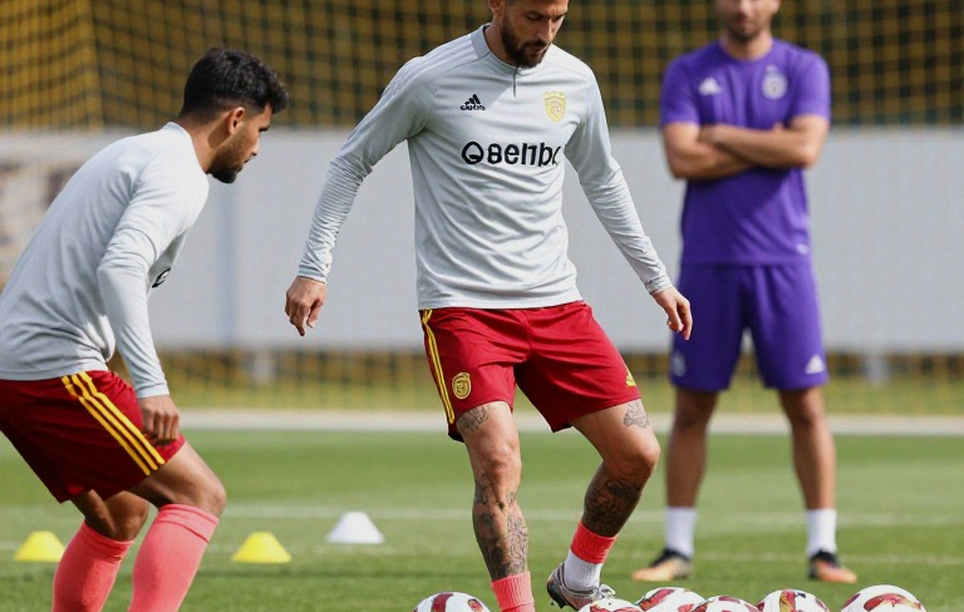
I find truth in football among the things left unsaid. And what was left unsaid at Hang Day tonight lies in the way Lucas Ribamar stood back up.
A striker scores. It is taken away. He watches an opponent open the scoring. And four minutes later he heads in the equaliser. Across thirty-one years of following football, I have learned that the players who leave a mark on collective memory are not those who score the most. They are those who score at the exact moment the story needs them.
Silent stands still echo with the heartbeat of a generation. Hang Day went quiet for three seconds in the 46th minute. Some will remember those three seconds forever as a loss. I choose to remember the moment in the 62nd, when the applause returned, no longer the sound of self-consolation but of a crowd recognising that their team was still standing.
Group E still has five matches to go. The Cong Viettel still have journeys ahead. And the first lesson of any Asian campaign is always the most uncomfortable one: you can play correctly and still not win. What decides everything is what you do in the twelve minutes after.